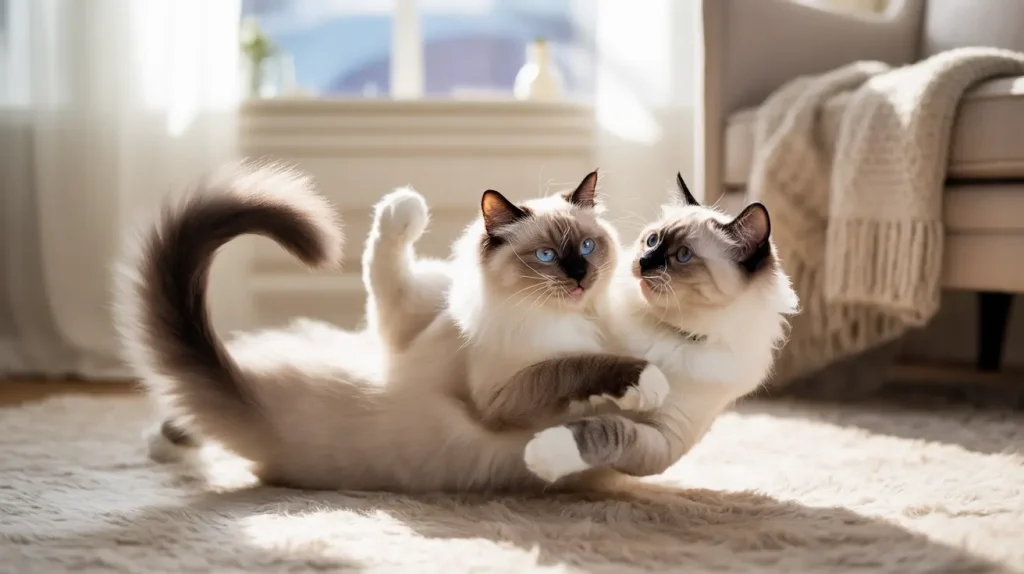
Have you ever watched cats gently groom each other one moment, only to suddenly start fighting the next? It’s confusing and even a little surprising.
You might wonder why these furry friends switch from caring to conflict so quickly. Understanding this strange behavior can help you better read your cat’s moods and strengthen your bond with them. Keep reading, and you’ll discover the surprising reasons behind this puzzling cat behavior—and what it means for your feline companions.

Credit: www.youtube.com
Social Grooming In Cats
Cats often groom each other as a way to build social bonds. This behavior helps them stay close and friendly.
Sometimes after grooming, cats may start to fight. This can confuse people but is normal in cat behavior.
Bonding And Trust
Grooming shows that cats trust each other. It helps them form strong friendships in their group.
By cleaning each other, cats share scents. This makes the group smell alike and feel safe together.
Hierarchy And Dominance
Grooming also shows who is in charge. Higher-ranking cats may groom others to show dominance.
If a cat feels its position is challenged, a fight can start after grooming. This is how they set limits.
- Dominant cat grooms lower cat
- Lower cat accepts or resists
- Resistance can lead to a fight
Stress Relief
Grooming helps cats relax and reduce stress. It is calming for both cats involved.
Sometimes a cat may get overstimulated and react by fighting after grooming. This is a normal stress response.
Triggers For Grooming-related Fights
Cats often groom each other as a sign of trust and friendship. But sometimes, this grooming can lead to fights. Understanding what causes these fights helps us better care for our cats.
Many triggers can make cats suddenly stop grooming and start fighting. These triggers often relate to how cats feel during and after grooming.
Overstimulation
Grooming can feel good, but too much touching may annoy a cat. Overstimulation happens when one cat grooms the other for too long or too roughly.
- Prolonged licking or nibbling
- Sensitive spots being touched too much
- One cat’s mood changing during grooming
When a cat feels overwhelmed, it might swat or hiss to stop the grooming. This can quickly turn into a fight.
Territorial Behavior
Cats are very protective of their space. Grooming can sometimes feel like an invasion of territory. This may cause tension, especially between cats that do not get along well.
| Behavior | Possible Cause | Example |
| Growling or hissing during grooming | Feeling invaded | Cat A grooms Cat B near Cat A’s favorite spot |
| Swatting after grooming | Defending personal space | Cat B grooms Cat A too close to Cat B’s bed |
| Chasing after grooming | Trying to push away | Cat A leaves and Cat B follows aggressively |
Jealousy And Competition
Some cats feel jealous if they think another cat gets more attention. Grooming can be part of this competition. Cats may fight if they want to be the main focus.
Signs of jealousy during grooming include:
- Interrupting grooming sessions
- Trying to push the other cat away
- Displaying aggressive postures after grooming
Body Language During Grooming And Fighting
Cats use body language to show their feelings during grooming and fights. Understanding these signs helps us know if they are calm or upset.
Grooming often means trust, but sometimes cats start to fight after. Watching their moves tells us what is happening.
Signs Of Relaxation
When cats groom each other calmly, they show many signs of being relaxed. Their bodies look soft and loose.
- Slow blinking between cats
- Soft, relaxed ears pointing forward
- Grooming with gentle licking
- Closed or half-closed eyes
- Calm tail movements or still tail
Warning Signals
Warning signs show that a cat feels uneasy or annoyed during grooming. These signs can mean a fight might start soon.
| Warning Signal | Description |
| Tail Twitching | Quick, sharp movements of the tail tip |
| Ears Flattened | Ears pushed back close to the head |
| Growling or Hissing | Low sounds showing discomfort |
| Stiff Body | Body becomes tense and still |
| Swatting Paws | Light hitting without claws |
Escalation To Aggression
If warning signs are ignored, cats may fight. Their body language shows clear aggression to stop the other cat.
- Hissing loudly and baring teeth
- Swatting with claws out
- Raised fur along the back
- Direct, hard staring
- Quick lunges or biting
Impact Of Age And Personality
Cats groom each other for many reasons. Age and personality affect this behavior. Sometimes grooming leads to fights.
Understanding how kittens and adult cats act helps explain why grooming can turn into conflict. Personality traits also play a big role.
Kitten Play Vs. Adult Interactions
Kittens use grooming as part of play and learning social skills. Adults groom to bond or show respect. But rough play or misunderstandings can cause fights.
- Kittens groom to explore and build trust.
- Adult cats groom to strengthen bonds.
- Kittens often start play fights after grooming.
- Adult cats may stop grooming if stressed or annoyed.
- Fights happen if one cat feels threatened or overstimulated.
Dominant Vs. Submissive Cats
Personality affects grooming and fighting. Dominant cats may groom submissive ones to show control. Submissive cats might accept or resist this.
| Trait | Grooming Behavior | Possible Outcome |
| Dominant | Initiates grooming often | May lead to control or tension |
| Submissive | Usually accepts grooming | May feel stressed if overgroomed |
| Neutral | Grooms and is groomed equally | Less chance of fights |
Preventing Grooming Fights
Cats groom each other to show care and build bonds. Sometimes, grooming leads to fights. This happens if one cat feels stressed or annoyed.
Preventing these fights helps keep peace between your cats. You can use simple steps to reduce tension and keep grooming friendly.
Safe Spaces And Multiple Resources
Cats need quiet places where they feel safe. They also need their own food, water, and litter boxes. This lowers competition and stops fights.
- Provide several resting spots for each cat.
- Place food and water bowls in different areas.
- Set up multiple litter boxes around the home.
- Use vertical spaces like shelves or cat trees.
- Allow cats to avoid each other if needed.
Monitoring Play Sessions
Play is good for cats but can cause fights if it gets too rough. Watch their behavior and stop play if one cat seems upset.
| Sign | What to Do |
| Hissing or growling | Pause the play session |
| Swatting or biting | Separate cats for a short time |
| One cat running away | Give that cat space |
| Calm grooming after play | Encourage gentle interaction |
Stress Reduction Techniques
Stress makes cats more likely to fight during grooming. Use calming tools to keep them relaxed.
Try these simple stress reducers:
- Use pheromone diffusers to calm cats.
- Keep a regular feeding and play schedule.
- Give each cat quiet time alone.
- Offer gentle petting and soft voices.
- Maintain a clean and safe environment.

Credit: www.reddit.com

Credit: www.reddit.com
Frequently Asked Questions
Why Do Cats Groom Each Other Before Fighting?
Cats groom each other to build trust and social bonds. Grooming reduces stress but can also test boundaries. If tensions rise, grooming may quickly turn into a fight as a way to assert dominance or resolve conflicts.
Is Grooming A Sign Of Friendship Among Cats?
Yes, mutual grooming is a strong sign of friendship and trust. It helps cats bond and feel secure. However, it can sometimes lead to fights if one cat feels uncomfortable or threatened.
Can Grooming Turn Into Aggressive Behavior In Cats?
Yes, grooming can escalate into aggression if one cat feels annoyed or threatened. Cats may suddenly switch from calm grooming to fighting to establish hierarchy or defend themselves.
Do Cats Groom Each Other To Show Dominance?
Grooming can be a subtle way to show dominance or submission. Dominant cats may groom others to assert control, while submissive cats accept grooming to maintain peace and social order.
Conclusion
Cats have a unique way of showing affection. Grooming strengthens their social bonds. Yet, sometimes, play can turn into a playful fight. It’s their instinctive behavior. This balance of grooming and tussling is normal. It helps them learn boundaries and build relationships.
Observing these behaviors can be entertaining and educational. Understanding their nature deepens your bond with them. Remember, it’s all part of their social world. Cats are complex yet fascinating creatures. Their grooming and fighting reveal much about their communication. Embrace these moments.
They’re essential for their social development.