
Curious about your feline friend’s mysterious lineage? Wondering if your cat’s quirky behavior is linked to a specific breed?
You’re not alone. Understanding what kind of cat you have is more than just a fun guessing game. It can deepen your connection with your pet and help you meet their unique needs. Imagine knowing exactly why your cat loves to perch high above the room or why they’re obsessed with your shoelaces.
This knowledge isn’t just for show; it’s a key to unlocking a happier, healthier life for your furry companion. Ready to dive into the world of whiskers, fur, and feline features? Keep reading to uncover the secrets your cat might be hiding in plain sight.
Recognizing Physical Traits
Knowing your cat’s type starts with looking at its body. Physical traits tell you a lot. They help you guess the breed or mix.
Focus on four main features: coat, body shape, eyes, and ears. Each trait shows clues about your cat’s kind.
Coat Patterns And Colors
Your cat’s coat can be many colors and patterns. These patterns can tell if your cat is purebred or mixed.
Common patterns include solid, striped, spotted, and patched. Colors range from black, white, orange, to gray.
- Solid:One color all over the body.
- Tabby:Stripes, swirls, or spots with an M shape on the forehead.
- Calico:White with orange and black patches.
- Tortoiseshell:Mixed black and orange patches without white.
- Pointed:Darker color on ears, face, paws, and tail.
Body Shape And Size
Body shape and size vary by breed. Some cats are slim and long, others are short and round.
Look at muscle tone, length of legs, and overall size. These features help identify the breed group.
- Slender:Long legs and neck, slim body.
- Stocky:Thick body, short legs.
- Medium build:Balanced size and muscle.
- Large:Big and muscular frame.
- Small:Petite and light.
Eye Color And Shape
Eye color ranges from blue, green, yellow, to amber. Some breeds have unique eye colors or shapes.
Eye shape can be round, almond, or slightly slanted. These details help you tell different cats apart.
- Round:Large and circular eyes.
- Almond:Slightly pointed at the ends.
- Slanted:Eyes tilt upward at the outer corners.
- Blue eyes:Common in Siamese and some white cats.
- Green eyes:Seen in Russian Blue and others.
Ear Shape And Position
Ear shape and position give clues about your cat’s breed. Ears can be tall, round, or folded.
Check if ears point straight up or tilt to the side. Size also matters; some cats have big ears, others small.
- Pointed ears:Tall and upright, common in many breeds.
- Rounded ears:Softly curved tips.
- Folded ears:Bent forward, like in Scottish Folds.
- Wide-set ears:Far apart on the head.
- Close-set ears:Positioned near the center of the head.
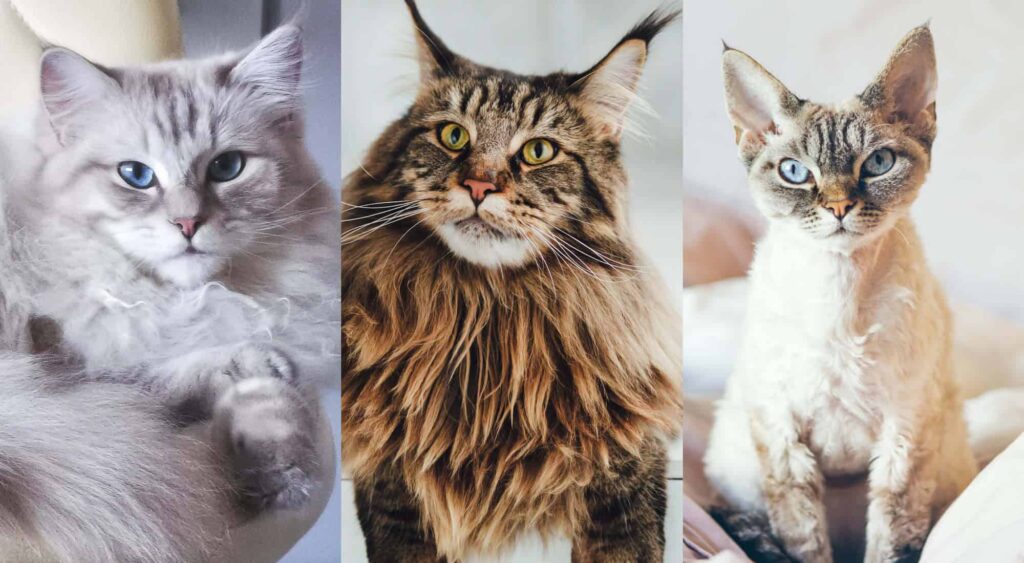
Credit: rawznaturalpetfood.com
Behavioral Clues
Understanding your cat’s behavior helps identify its breed or mix. Cats show unique habits linked to their kind.
Watching how your cat acts daily gives clues about its personality and origin.
Activity Levels
Some cats are very active and playful. Others prefer to rest and relax most of the day.
High energy cats like Bengals or Abyssinians often chase toys and climb a lot. Low energy cats like Persians stay calm and enjoy quiet time.
- Active cats run, jump, and explore often
- Quiet cats rest more and move slowly
- Activity can hint at the breed’s natural traits
Social Tendencies
Some cats love company and enjoy being near people. Others prefer to be alone or with few close friends.
Siamese cats are usually very social and seek attention. Russian Blues might be shy and keep to themselves more.
- Friendly cats greet guests and follow owners
- Shy cats hide or stay in quiet spots
- Social behavior helps identify breed personality
Vocalization Patterns
Cats use sounds to communicate. Some breeds are chatty, while others are quiet.
Siamese cats often meow loudly and frequently. British Shorthairs tend to be calm and less vocal.
- Chatty cats meow, yowl, and purr a lot
- Quiet cats use few sounds
- Vocal habits give clues about cat type
Hunting Instincts
Many cats like to hunt or chase small animals and toys. This behavior varies by breed.
Active hunters like Maine Coons enjoy catching moving toys. Some breeds are less interested in hunting and prefer lounging.
- Strong hunters stalk, pounce, and catch objects
- Less hunting interest means more relaxed behavior
- Hunting style can hint at cat’s heritage
Common Cat Breeds
Many cats belong to different breeds with unique looks and personalities. Knowing your cat’s breed helps you understand its behavior and care needs.
This guide covers popular domestic breeds, rare and exotic breeds, and signs that show if your cat is mixed breed.
Popular Domestic Breeds
Domestic cat breeds are common pets and vary in size, coat, and personality. Some popular ones are easy to spot by their features.
- American Shorthair:Medium size, short coat, friendly and playful.
- British Shorthair:Round face, dense coat, calm and gentle.
- Persian:Long fur, flat face, quiet and sweet.
- Siamese:Slim body, short coat, vocal and social.
- Maine Coon:Large size, long fur, friendly and intelligent.
Rare And Exotic Breeds
Some cats come from rare or unusual breeds. These cats may have special features or colors you rarely see in common pets.
| Breed | Features | Personality |
| Bengal | Spotted coat like a leopard | Active and curious |
| Sphynx | Hairless body, wrinkled skin | Affectionate and playful |
| Scottish Fold | Folded ears | Calm and loving |
| Russian Blue | Short blue-gray coat | Shy but loyal |
Mixed Breed Indicators
Many cats are mixed breeds, showing traits from several types. Signs include varied coat colors and body shapes that do not match one breed.
Common mixed breed signs:
- Different colored eyes or uneven markings
- Medium to large size with no clear breed shape
- Coat length varies from short to long in one cat
- Personality traits that mix shyness, playfulness, and calmness

Credit: www.youtube.com
Using Technology For Identification
Finding out what kind of cat you have can be easier with technology. Today, tools like DNA tests and mobile apps help identify cat breeds. These methods give clear and quick answers.
Technology helps you learn about your cat’s origin and traits. It also helps you care for your pet better by knowing its breed.
Cat Dna Testing
Cat DNA tests analyze your cat’s genes to tell you about its breed mix and health risks. You take a small sample, like a cheek swab, and send it to a lab. The lab sends results online in a few weeks.
- Identify breed or mix of breeds
- Learn about genetic health issues
- Understand your cat’s traits and behavior
- Discover your cat’s ancestry and origins
Mobile Apps And Online Tools
Mobile apps and websites help identify cat breeds using photos. You upload a picture of your cat and the app compares it to a breed database. These tools give fast results and extra info about each breed.
| Feature | Description |
| Photo Analysis | Compare your cat’s photo with breed images |
| Breed Info | Learn about breed traits and care needs |
| User Community | Share photos and get help from other cat owners |
| Health Tips | Get advice based on your cat’s breed |
Consulting Professionals
Knowing your cat’s breed can help you understand its behavior and care needs. Sometimes, it is hard to tell just by looking. Talking to professionals can give you clear answers.
Experts like veterinarians, breeders, and animal shelter staff have the knowledge to identify cat types. They can guide you based on your cat’s features and history.
Veterinarians
Veterinarians see many cats and can often spot breed traits. They check physical features and health signs that match certain breeds. You can ask your vet to help identify your cat.
Some vets may use specialized tools or tests to learn more about your cat’s breed. They can also advise on care based on breed-specific needs.
Cat Breeders And Experts
Breeders know detailed traits of many cat breeds. They can compare your cat’s looks and behavior to known breeds. Experts often watch for:
- Coat colors and patterns
- Body shape and size
- Eye color and shape
- Personality traits
- Ear shape and tail length
Talking to a breeder or expert can help you learn if your cat is purebred or mixed. They may also offer advice on breed history.
Animal Shelters
Animal shelters meet many cats and often know common local breeds. They can give you clues about your cat’s type based on appearance and behavior. Shelters also keep records if your cat was adopted from them.
| Service | What They Offer |
| Veterinarians | Health checkups and breed identification |
| Cat Breeders and Experts | Detailed breed traits and history |
| Animal Shelters | Breed clues and adoption records |
Documenting Your Cat’s Features
Knowing your cat’s unique traits helps identify its breed and personality. Taking notes and pictures makes this easier.
Careful records can also help vets and keep your pet healthy. Start by focusing on simple details.
Taking Clear Photos
Photos show your cat’s color, size, and shape. Take pictures in bright light from many angles.
- Capture the face, body, and tail clearly
- Include close-ups of eyes and paws
- Use a plain background for better contrast
- Take photos when the cat is calm and still
Recording Behavior And Habits
Watch how your cat acts daily. Note its favorite toys, sleeping spots, and activity times.
| Behavior | Description |
| Play style | Gentle, rough, or shy |
| Meal routine | Times and food preferences |
| Social habits | Likes people or other pets |
| Vocal sounds | Meows, purrs, or quiet |
Keeping Health Records
Write down vet visits, vaccinations, and any illnesses. Track weight and changes in appetite.
- Note dates of all vet appointments
- Record any medications or treatments
- Keep track of allergies or reactions
- Monitor changes in behavior or health

Credit: www.reddit.com
Frequently Asked Questions
How Can I Identify My Cat’s Breed At Home?
You can identify your cat’s breed by observing physical traits like fur pattern, size, and eye color. Online breed guides and cat DNA tests also help determine breed accurately.
What Are Common Traits For Different Cat Breeds?
Different cat breeds have unique traits like coat length, color, and personality. For example, Siamese cats are vocal, while Maine Coons have long fur and large size.
Can A Vet Help Determine My Cat’s Breed?
Yes, a veterinarian can provide insights based on physical exams and experience. They may also recommend DNA testing for precise breed identification.
Is Cat Dna Testing Reliable For Breed Identification?
Cat DNA tests are generally reliable and reveal breed composition and health risks. They offer detailed information beyond visual identification, enhancing accuracy.
Conclusion
Knowing your cat’s type helps you care for them better. Observe their looks, size, and behavior closely. Use online tools or ask a vet for advice. Each cat is special, with unique traits to enjoy. Take time to learn about your furry friend.
This way, you build a stronger bond every day. Keep exploring and loving your cat’s personality. Simple steps lead to happy and healthy pets.