
Have you ever wondered which cat is the biggest in the world? Whether you’re a cat lover or just curious, knowing about the largest feline can surprise you.
This isn’t just about house cats—there are wild cats out there that can take your breath away with their size and power. Keep reading, and you’ll discover facts that might change how you see cats forever. Ready to find out what the biggest cat really is?
Let’s dive in.

Credit: www.reddit.com
Largest Wild Cats
Wild cats are some of the most powerful and beautiful animals on Earth. They come in many sizes and live in different habitats.
This article looks at four of the biggest wild cats: the Siberian tiger, lion, jaguar, and leopard.
Siberian Tiger
The Siberian tiger is the largest wild cat in the world. It lives mainly in the Russian Far East. Male Siberian tigers can weigh up to 660 pounds.
They have thick fur to keep warm in cold climates. Their strength and size make them top predators.
Lion
Lions are known as the “king of the jungle.” They live in Africa and a small part of India. Male lions weigh about 420 pounds on average.
- Live in groups called prides
- Have a mane unique to males
- Hunt large animals like zebras and buffalo
Jaguar
Jaguars live in the Americas, mostly in rainforests. They are the biggest cats in the Americas and weigh up to 250 pounds.
| Feature | Description |
| Weight | Up to 250 pounds |
| Habitat | Rainforests, swamps |
| Hunting Style | Powerful bite, ambush predator |
Leopard
Leopards are smaller than the others but still strong. They live in Africa and Asia. Male leopards weigh about 200 pounds.
Leopards are very good climbers. They often carry prey up trees to keep it safe from other animals.
Biggest Domestic Cats
Domestic cats come in many sizes and shapes. Some breeds grow much larger than others.
We will look at three of the biggest domestic cat breeds. These cats are known for their size and unique traits.
Maine Coon
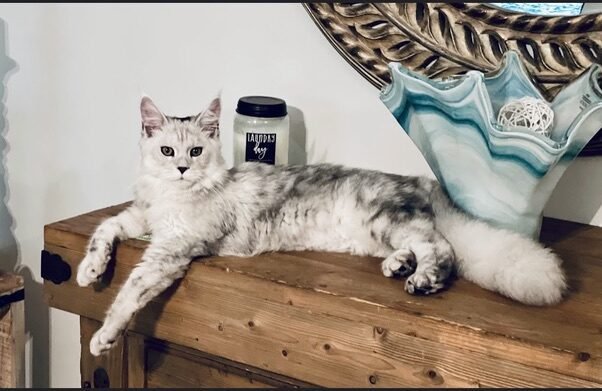
The Maine Coon is one of the largest domestic cat breeds. They are known for their long fur and gentle nature.
- Weight: 10 to 25 pounds
- Length: Up to 40 inches including tail
- Coat: Thick and water-resistant
- Personality: Friendly and intelligent
Savannah Cat
Savannah cats are a mix of domestic cats and wild servals. They have long legs and a tall build.
| Trait | Details |
| Weight | 12 to 25 pounds |
| Height | Up to 17 inches at the shoulder |
| Coat | Spotted with short fur |
| Behavior | Active and curious |
Chausie
Chausie cats come from crossing domestic cats with wild jungle cats. They are slim but muscular.
Chausie cats have these key features:
- Weight: 15 to 20 pounds
- Height: Medium to tall
- Coat: Short and sleek
- Temperament: Playful and social
Factors Affecting Cat Size
The size of a cat depends on many things. Some cats grow bigger than others. Knowing what affects their size can help us understand these differences.
Three main factors change how big a cat can get. These are genetics, habitat, and diet. Each one plays a special role in a cat’s growth.
Genetics
Genetics is the main factor that controls a cat’s size. Cats inherit traits from their parents. These traits include how tall or heavy they will be.
Some cat breeds are naturally larger. For example, Maine Coons are big because of their genes. Other cats have genes that keep them small.
- Large breeds have genes for strong bones and muscles
- Small breeds have genes for lighter frames
- Mixed breeds show a mix of size traits from parents
Habitat
The place where a cat lives affects its size. Cats in colder places often grow thicker fur. This helps keep them warm and can add to their size.
Wild cats living in open spaces may grow bigger to defend their territory. Cats in small, crowded places may stay smaller to move easily.
- Cold climates favor larger, thicker cats
- Warm climates may produce smaller cats
- Space and shelter affect growth and size
Diet
A cat’s food impacts how big it can grow. Healthy food with enough protein helps cats build muscle. Poor diets can limit their growth.
Wild cats hunt for their food, which is rich in nutrients. Pet cats depend on what owners feed them. Balanced diets lead to healthy size and weight.
- High protein helps muscle growth
- Vitamins and minerals support bones
- Too little food causes small size
- Overfeeding can cause unhealthy weight
Credit: www.prwe.com
Comparing Size Measurements
Big cats vary a lot in size. We can compare them by weight, length, and height.
Each measurement shows a different part of their size. Let’s look at each one closely.
Weight
Weight tells us how heavy the biggest cats are. Tigers usually weigh the most.
- Siberian tiger: up to 660 pounds (300 kg)
- Lion: around 420 pounds (190 kg)
- Jaguar: up to 250 pounds (113 kg)
- Leopard: about 200 pounds (90 kg)
Length
Length measures from the nose to the tail tip. Tigers are longest among big cats.
| Big Cat | Length (feet) | Length (meters) |
| Siberian Tiger | 10.5 | 3.2 |
| Lion | 8.5 | 2.6 |
| Jaguar | 6.5 | 2.0 |
| Leopard | 6.2 | 1.9 |
Height
Height is how tall a cat stands at the shoulder. Lions stand tall to show strength.
- Siberian tiger: about 3.3 feet (1 meter) tall
- African lion: about 4 feet (1.2 meters) tall
- Jaguar: around 2.5 feet (0.75 meters) tall
- Leopard: near 2.5 feet (0.75 meters) tall
Records Of Giant Cats
Giant cats have fascinated people for centuries. Their size and strength stand out in the animal kingdom.
This article explores some of the biggest cats ever recorded. We look at wild and domestic giants.
Largest Tiger Ever Recorded
The largest tiger ever recorded was a Siberian tiger. It measured about 12 feet from nose to tail tip.
This tiger weighed around 932 pounds. It was captured in the early 20th century in eastern Russia.
Heaviest Domestic Cat
The heaviest domestic cat on record was a male named Himmy from Australia. He weighed 44 pounds.
| Name | Weight (lbs) | Breed | Country |
| Himmy | 44 | Unknown | Australia |
| Barivel | 34 | Maine Coon | Italy |
| Big Boy | 33 | Unknown | USA |
Notable Big Cat Sightings
Reports of unusually large cats appear worldwide. Some are true, while others remain legends.
- In the United States, sightings of “mountain lions” over 10 feet long are rare but reported.
- In India, tigers exceeding 11 feet have been documented by forest officials.
- Africa has reports of lions larger than 600 pounds, which is above average size.
Conservation Status Of Large Cats
Large cats are some of the most powerful animals on Earth. They include lions, tigers, leopards, and jaguars. Many of these big cats face threats that put their survival at risk.
Protecting large cats is important for nature and people. Let’s explore the challenges they face and how we can help them.
Threats To Big Cats
Big cats lose their homes because of farming and cities. People also hunt them for their fur and body parts. This hunting is illegal but still happens.
Climate change changes where big cats can live. It affects the animals they eat. Diseases and conflicts with humans also harm big cat populations.
- Habitat loss from farming and building
- Poaching for fur and bones
- Climate change reducing prey
- Human-wildlife conflicts
- Diseases in wild populations
Protection Efforts
Many groups work to save big cats. They protect land where big cats live. They also stop illegal hunting and trade.
Educating people helps reduce conflicts. Laws protect big cats in many countries. Some programs breed big cats in zoos to help wild populations.
- Creating protected wildlife areas
- Stopping illegal hunting and trade
- Teaching people about big cats
- Making laws to protect animals
- Breeding programs in zoos
Role In Ecosystems
Big cats keep nature balanced. They control the number of other animals like deer and wild pigs. This helps plants grow well.
When big cats disappear, ecosystems can become unhealthy. Other animals may grow too many and harm the land. Protecting big cats helps nature stay strong.
- Control prey animal numbers
- Help maintain plant growth
- Keep ecosystems healthy and balanced
- Support other wildlife by their presence
Credit: bellspurr.com
Frequently Asked Questions
What Is The Biggest Wild Cat Species?
The Siberian tiger is the biggest wild cat species. Males can weigh up to 660 pounds and measure 10 feet long. They are native to Russia’s forests and are known for their strength and size.
How Big Can A Domestic Cat Grow?
Domestic cats usually weigh between 8 to 15 pounds. The largest domestic breeds, like the Maine Coon, can weigh up to 25 pounds. Size varies by breed, diet, and genetics but they are much smaller than wild cats.
Which Cat Holds The Record For Largest Size?
The liger, a hybrid of a lion and tiger, holds the record for largest cat. They can weigh over 900 pounds and reach lengths of 12 feet. Ligers only exist in captivity, not in the wild.
Why Are Some Cats Bigger Than Others?
Cat size depends on species, genetics, diet, and environment. Wild cats grow larger due to hunting needs and survival. Domestic cats are smaller due to domestication and selective breeding.
Conclusion
Discovering the biggest cat breeds is truly fascinating. These majestic creatures capture our hearts with their size. Maine Coons, Bengals, and Savannahs impress with their grandeur. Each breed has unique traits that make them special. Understanding their needs helps us care for them better.
Big cats require space and attention. They thrive in loving homes. Their playful and affectionate nature brings joy. Choosing a large cat means welcoming a gentle giant. It’s a rewarding experience. Big cats can be the perfect companions. They enrich our lives with their presence and love.