
Have you ever wondered just how many different cat breeds exist? If you’re a cat lover or simply curious, knowing the variety of feline friends out there can surprise and delight you.
From fluffy to sleek, playful to calm, each breed has its own unique charm. You’ll discover the fascinating world of cat breeds and learn what makes each one special. Keep reading—you might find your perfect feline match or impress your friends with fun cat facts!
Global Cat Breed Count
Cat lovers often ask how many different cat breeds exist worldwide. The number can vary depending on the cat registry or organization.
Knowing the breed count helps people understand the diversity of cats and their unique traits.
Official Cat Breed Registries
Major cat organizations keep lists of recognized breeds. Each has its own criteria for accepting breeds.
- The Cat Fanciers’ Association (CFA)
- The International Cat Association (TICA)
- The Fédération Internationale Féline (FIFe)
- The Governing Council of the Cat Fancy (GCCF)
The number of recognized breeds differs in each registry but is generally close.
Breed Counts By Organization
| Organization | Number of Recognized Breeds |
| Cat Fanciers’ Association (CFA) | 44 |
| International Cat Association (TICA) | 73 |
| Fédération Internationale Féline (FIFe) | 48 |
| Governing Council of the Cat Fancy (GCCF) | 42 |
Factors Affecting Breed Numbers
Some breeds are new and still gaining recognition. Others are rare or region-specific.
- New breeds may take years to be accepted.
- Some breeds exist only in certain countries.
- Breed standards can change over time.
- Crossbreeding can create new types.
Summary Of Global Cat Breeds
Overall, there are about 40 to 70 officially recognized cat breeds worldwide. This range depends on the organization and breed status.
Many cat enthusiasts enjoy the diversity and history behind each breed.
Credit: medium.com
Major Cat Breed Groups
There are many different cat breeds in the world. They fall into groups based on their origins and traits.
Understanding these groups helps people learn about the variety and history of cats.
Natural Breeds
Natural breeds come from cats that lived in certain areas for a long time. They developed traits without much human help.
These cats adapted to their environments and kept their unique features over time.
- Maine Coon
- Norwegian Forest Cat
- Russian Blue
- Egyptian Mau
- Turkish Van
Hybrid Breeds
Hybrid breeds result from crossing domestic cats with wild cats. Breeders create new looks and traits this way.
These cats often have wild features but can live as pets in homes.
- Bengal (Asian leopard cat + domestic cat)
- Savannah (Serval + domestic cat)
- Chausie (Jungle cat + domestic cat)
Developed Breeds
Developed breeds come from planned breeding. Breeders choose traits like color, size, and fur type.
These breeds often have unique looks and personalities created by humans.
- Siamese
- Persian
- Ragdoll
- Burmese
- Scottish Fold
Popular Cat Breeds Worldwide
Cat lovers all over the world enjoy many different breeds. Each breed has unique looks and personalities.
Here are some of the most popular cat breeds you can find in many homes.
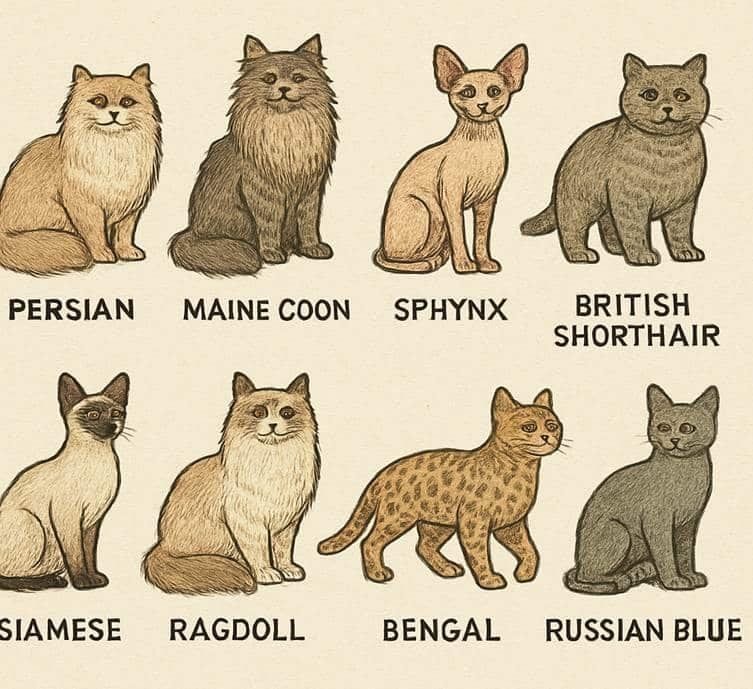
Siamese
The Siamese cat is famous for its striking blue eyes and short coat. It has a slim body and a triangular face.
Siamese cats are very vocal and social. They enjoy spending time with their owners and playing.
Maine Coon
Maine Coons are one of the largest domestic cat breeds. They have long fur and tufted ears.
These cats are gentle giants. They are friendly, smart, and good with children and other pets.
Persian
Persian cats are known for their long, thick fur and flat faces. They look very elegant and calm.
They prefer quiet environments and often enjoy relaxing in cozy places. Persians need regular grooming.
Bengal
Bengal cats look wild with their spotted or marbled coats. They have strong muscles and are very active.
These cats like to climb and play. Bengals are curious and enjoy interactive toys and games.
Credit: paradepets.com
Rare And Exotic Cat Breeds
There are many cat breeds worldwide, but some are very rare and exotic. These breeds have unique looks and traits not seen in common cats.
Rare cat breeds attract cat lovers who want something different. They often have special stories and origins.
Khao Manee
The Khao Manee is a rare breed from Thailand. It is known for its pure white coat and striking eyes.
This breed sometimes has odd-colored eyes, one blue and one gold. It is a symbol of good luck in Thai culture.
- Origin: Thailand
- Coat: Pure white
- Eye colors: Blue, gold, or odd-eyed
- Personality: Friendly and playful
Kurilian Bobtail
The Kurilian Bobtail comes from Russia and Japan. It has a short, fluffy tail that looks like a pom-pom.
This breed is strong and good at hunting. It is loyal to its family and loves to play in water.
- Origin: Russia and Japan
- Tail: Short and bobbed
- Coat: Thick and dense
- Temperament: Loyal and playful
American Wirehair
The American Wirehair has a unique coat that feels curly and rough. This makes it stand out from other cats.
This breed is calm and affectionate. It enjoys quiet homes and bonding with its owners.
- Origin: United States
- Coat: Curly and wiry
- Color: Many colors and patterns
- Personality: Calm and loving
Cat Breed Classification Standards
Cat breeds have many different types worldwide. Their classification depends on rules set by cat groups. These groups study traits like looks and behavior.
Standards help keep the breed pure and guide breeders and judges. Each cat association has its own way to recognize breeds.
Feline Associations
Feline associations are organizations that manage cat breed standards. They decide which breeds are official. Some big groups include CFA, TICA, and FIFe.
- CFA (Cat Fanciers’ Association):Recognizes about 44 breeds. It focuses on breed history and health.
- TICA (The International Cat Association):Lists over 70 breeds. It allows new breeds to develop.
- FIFe (Fédération Internationale Féline):Covers around 48 breeds mainly in Europe.
Breed Recognition Criteria
Each association uses criteria to accept a breed. These include physical traits, behavior, and breeding history. The cat must breed true to type.
| Criteria | Description |
| Physical Traits | Coat color, pattern, body shape, and eye color must match the breed standard. |
| Behavior | Temperament and typical actions should fit the breed’s profile. |
| Breeding History | Documented lineage showing consistent breed traits over generations. |
| Genetic Health | Tests to ensure the breed does not carry harmful genetic diseases. |
| Population Size | Enough cats to maintain the breed without inbreeding risks. |
Genetics Behind Cat Breeds
Cat breeds differ because of their unique genes. These genes control their looks and behavior.
Breeders select certain traits to keep or change. This creates many types of cats with special features.
Coat Colors And Patterns
Cat coat colors come from genes that control pigments. Two main pigments are eumelanin and pheomelanin.
Patterns like stripes, spots, or solid colors happen because of gene combinations. These patterns help identify breeds.
- Solid: One color all over the body
- Tabby: Stripes or spots in different shapes
- Calico: White with orange and black patches
- Colorpoint: Darker face, ears, paws, and tail
Physical Traits
Genes decide size, ear shape, and body form of cats. Each breed has special physical traits.
Some cats have long hair, others short. Ear shapes can be pointed or folded, depending on their genes.
- Size: Small, medium, or large body
- Fur length: Short, medium, or long
- Ear shape: Pointed, rounded, or folded
- Tail type: Long, short, or curly
Behavioral Traits
Genes influence cat behavior too. Some breeds are calm, others are playful or curious.
Temperament can vary with breed. Breeders use this to create cats with certain personalities.
- Activity level: High or low energy
- Social needs: Independent or friendly
- Vocalization: Quiet or talkative
- Hunting skills: Strong or mild
Choosing A Cat Breed
Many cat breeds exist, each with unique traits. Choosing the right breed helps you and the cat live happily.
Think about your lifestyle, health needs, and the cat’s personality before making a choice.
Lifestyle Compatibility
Some cat breeds do better in busy homes. Others need quiet places. Know what fits your daily life.
- Active breeds like Bengals need lots of playtime.
- Calm breeds like Ragdolls enjoy quiet and cuddles.
- Short-haired cats may be easier to groom for busy owners.
- Long-haired cats need regular brushing.
Health Considerations
Some breeds have specific health risks. Learning about these helps you prepare for care needs.
| Breed | Common Health Issue | Care Tip |
| Persian | Respiratory problems | Regular vet checkups |
| Maine Coon | Hip dysplasia | Maintain healthy weight |
| Sphynx | Skin sensitivity | Use gentle skin care |
| Siamese | Dental disease | Regular teeth cleaning |
Temperament Traits
Temperament varies by breed. Some cats are social, others more independent.
- Sociable cats like Abyssinians enjoy company.
- Independent breeds like Russian Blue are more reserved.
- Playful cats need toys and interaction daily.
- Quiet breeds suit calm homes and less active families.
Credit: catopedea.com
Future Trends In Cat Breeding
Cat breeding is changing with new ideas and science. Breeders work on creating new breeds and keeping cats healthy.
People want cats that are unique but also safe and healthy. This shapes how cat breeding will grow in the future.
Emerging Breeds
New cat breeds are appearing from mixing old breeds. Breeders look for special traits like coat color or fur type.
Some new breeds may become popular in the next years. These cats often have unique looks and friendly personalities.
- Breeds with unusual fur patterns or colors
- Cats bred for calm and social behavior
- Smaller or larger breeds to fit home needs
Ethical Breeding Practices
Ethical breeding means caring for cats’ health and well-being. Breeders avoid harmful practices and focus on good care.
They test cats for diseases and keep breeding lines healthy. This helps reduce genetic problems in new cats.
- Health checks before breeding cats
- Choosing mates to avoid genetic diseases
- Providing good living conditions for cats
- Stopping breeding if health risks appear
Frequently Asked Questions
How Many Recognized Cat Breeds Exist Worldwide?
There are around 70 to 75 officially recognized cat breeds globally. Different cat registries may have slight variations in numbers. These breeds vary in appearance, size, and personality traits, offering a wide range of options for cat lovers.
What Defines A Cat Breed’s Uniqueness?
A cat breed’s uniqueness is defined by its genetics, physical traits, and behavior. This includes coat color, pattern, body shape, and temperament. Breeders selectively maintain these traits to preserve breed standards and characteristics.
Which Cat Breeds Are Most Popular?
Popular cat breeds include the Siamese, Persian, Maine Coon, Ragdoll, and Bengal. These breeds are known for their distinctive looks and friendly personalities. Their popularity comes from both appearance and temperament.
Can New Cat Breeds Still Be Developed?
Yes, new cat breeds can be developed through selective breeding. Breeders cross existing breeds to create unique traits and characteristics. New breeds must meet recognition standards to be officially accepted.
Conclusion
Exploring cat breeds opens a world of diversity and charm. Each breed has unique features and personalities. From playful Siamese to fluffy Persians, choices abound. Cats enrich lives with their presence and affection. Understanding different breeds helps in choosing the right companion.
Each cat offers love in its own special way. Their quirks and traits bring joy to many homes. Knowledge of breeds enhances appreciation of these wonderful creatures. Let this guide inspire your journey into the feline world. Discover the perfect breed that matches your lifestyle and heart.