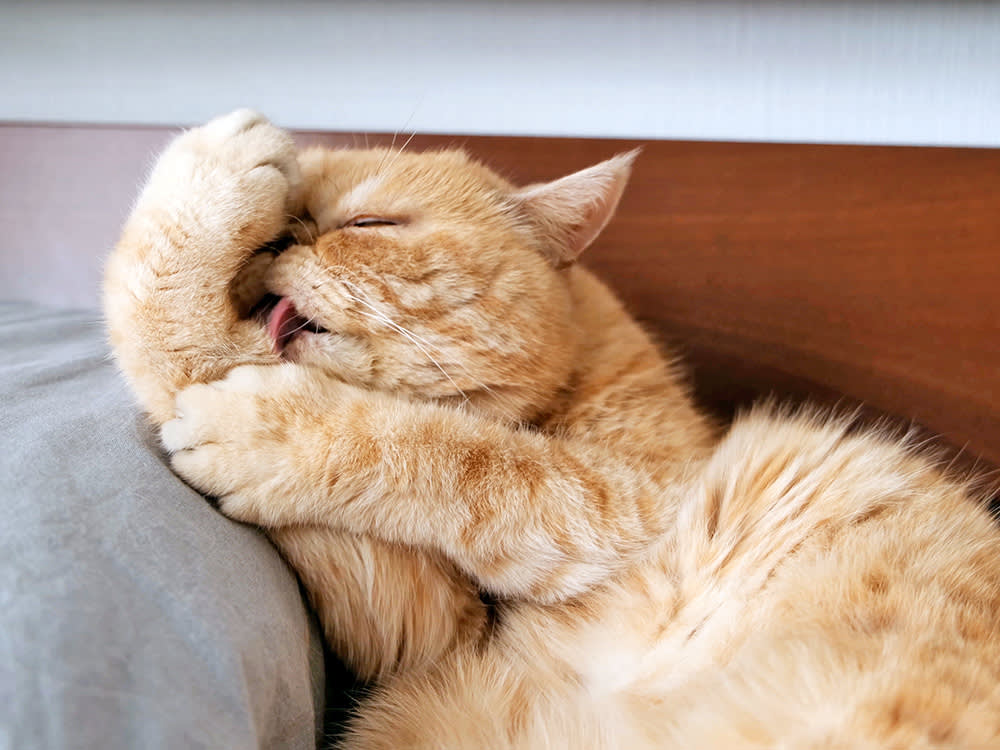
Have you ever watched your cat grooming and noticed it biting itself? It might seem strange or even a little worrying.
You might wonder, “Is my cat hurting itself on purpose? ” Or “Is this normal behavior? ” Understanding why cats bite themselves when grooming can help you keep your furry friend happy and healthy. You’ll discover the surprising reasons behind this common habit and learn what it means for your cat’s well-being.
Keep reading—you’ll be amazed at what you find out!
Cat Grooming Basics
Cats spend a lot of time grooming themselves. Grooming helps keep their fur clean and healthy.
Understanding why cats bite themselves while grooming can help you care for your pet better.
How Cats Groom Themselves
Cats use their tongue, teeth, and paws to clean their fur. Their rough tongues remove dirt and loose hair.
- They lick their fur to clean it and remove loose hair.
- They use their teeth to bite off mats or tangles.
- They use their paws to wash their faces and heads.
- They stretch and twist to reach all parts of their body.
Normal Grooming Behavior
Biting during grooming is usually normal. Cats bite gently to clean or fix their fur.
| Behavior | Reason |
| Biting fur | Removing dirt or tangles |
| Scratching | Removing loose hair or itching |
| Licking | Cleaning and smoothing fur |
| Chewing | Getting rid of fleas or irritants |

Credit: www.reddit.com
Reasons Behind Biting
Cats bite themselves during grooming for several reasons. This behavior helps them stay clean and comfortable. It may also signal some health issues.
Understanding why cats bite can help owners take better care of their pets. Below are the main reasons cats bite themselves when grooming.
Itching And Irritation
Cats often bite themselves to relieve itching or skin irritation. This can happen from dry skin or small injuries. Biting helps them scratch hard-to-reach areas.
- Dry or flaky skin causes discomfort.
- Minor wounds or insect bites create irritation.
- Stress can also increase itching behavior.
Removing Parasites
Parasites like fleas and ticks cause cats to bite and groom more often. Biting helps remove these pests from their fur and skin. Parasite presence can lead to intense scratching and biting.
| Parasite Type | Effect on Cat |
| Fleas | Cause itching and skin irritation |
| Ticks | Attach to skin and cause pain |
| Mites | Lead to hair loss and intense itching |
Allergic Reactions
Allergies can make cats bite themselves to ease skin discomfort. Allergens in food, pollen, or dust can trigger this reaction. Biting may help reduce swelling and itchiness.
Common allergy signs include:
- Red or swollen skin
- Excessive licking or biting
- Hair loss in specific areas
Health Issues Linked To Biting
Cats often bite themselves while grooming to clean hard-to-reach spots. Sometimes, biting shows a deeper problem. It can signal health troubles that need attention.
Understanding these health issues helps cat owners keep their pets safe and comfortable. Let’s look at some common causes behind this behavior.
Skin Infections
Skin infections cause itching and pain. Cats bite or scratch to ease discomfort. Bacterial or parasitic infections often lead to these problems.
- Red, inflamed patches on the skin
- Hair loss in small or large areas
- Scabs or crusts from scratching and biting
- Unusual odor from infected skin
Fungal Problems
Fungal infections like ringworm cause cats to bite themselves. These infections spread easily and cause itching. The skin may look scaly or flaky.
| Symptom | Description |
| Itching | Persistent and intense |
| Hair Loss | Usually circular bald spots |
| Skin Appearance | Scaly, red, or flaky patches |
| Spread | Highly contagious to other pets |
Pain Or Discomfort
Cats may bite themselves if they feel pain. Pain can come from injuries or internal problems. Biting helps distract from the pain or soothe the area.
Signs of pain or discomfort include:
- Excessive licking or biting of one spot
- Changes in behavior or mood
- Reluctance to move or play
- Visible wounds or swelling
Behavioral Causes
Cats often bite themselves while grooming. This behavior can have different causes. Many times, it relates to how cats feel or act.
Understanding these behaviors helps pet owners care better for their cats.
Stress And Anxiety
Stress makes cats bite their skin more than usual. Anxiety can cause a cat to focus too much on grooming.
This behavior helps them feel calmer but can harm their skin.
- Loud noises may cause stress.
- Changes in environment can increase anxiety.
- New pets or people may disturb a cat’s calm.
Boredom And Overgrooming
Cats that are bored often groom themselves too much. Overgrooming can lead to biting their own skin.
Without enough play or attention, cats may use grooming to pass time.
- Lack of toys or activities causes boredom.
- Loneliness increases grooming as a habit.
- Too much grooming can cause skin irritation.
When Biting Becomes A Problem
Cats often bite themselves during grooming. This is normal behavior. It helps them clean hard-to-reach places. But sometimes, the biting can become excessive.
Excessive biting may cause pain or skin damage. It can also signal health or stress issues. Watching for signs can help you protect your cat’s well-being.
Signs Of Excessive Biting
Look for these signs that your cat is biting too much:
- Red or irritated skin
- Hair loss or bald patches
- Bleeding or scabs
- Constant licking or biting at one spot
- Visible wounds or sores
- Changes in behavior like restlessness or irritability
Potential Consequences
Excessive biting can cause serious problems for your cat. It may lead to infections or worsen skin conditions. Your cat might feel pain or discomfort. These issues might require a vet’s care.
| Consequence | Description |
| Skin Infection | Bacteria enter through broken skin causing infection |
| Hair Loss | Repeated biting removes fur and damages follicles |
| Open Wounds | Wounds can bleed and take time to heal |
| Behavioral Issues | Stress or anxiety may increase due to pain |
| Secondary Illness | Underlying problems like allergies or parasites worsen |

Credit: www.reddit.com
How To Help Your Cat
Cats sometimes bite themselves while grooming. This can be normal or a sign of a problem.
You can help your cat feel better by checking for health issues and giving proper care.
Veterinary Checkups
Take your cat to the vet to rule out skin infections or allergies. These can cause biting and discomfort.
The vet may check for parasites like fleas or mites. These pests often cause itching and biting.
Environmental Enrichment
Stress and boredom can make cats bite themselves. Giving a fun and safe environment helps reduce this behavior.
- Provide toys and scratching posts
- Play with your cat daily
- Offer comfortable resting spots
- Keep a routine feeding schedule
- Use calming products like pheromone sprays
Treatment Options
| Treatment | Purpose |
| Medicated shampoos | Help with skin infections |
| Anti-itch creams | Reduce itching and biting |
| Flea control | Remove parasites causing irritation |
| Behavior therapy | Lower stress and anxiety |
| Prescription medication | Treat allergies or infections |
Follow your vet’s advice carefully for the best results. Treat your cat with patience and care.

Credit: www.goodrx.com
Frequently Asked Questions
Why Do Cats Bite Themselves While Grooming?
Cats bite themselves during grooming to remove dirt and loose fur. It helps keep their coat clean and healthy. Biting also stimulates circulation and relieves itches or irritations on their skin.
Is Self-biting During Grooming Normal For Cats?
Yes, self-biting is a normal grooming behavior. Cats use their teeth to clean hard-to-reach areas. However, excessive biting could signal skin issues or stress, so monitor your cat’s behavior closely.
Can Biting While Grooming Cause Harm To Cats?
Occasional biting is safe and part of grooming. But constant biting may cause skin damage or infections. If your cat bites excessively, consult a vet to rule out allergies or parasites.
How Can I Stop My Cat From Biting Too Much?
Provide regular grooming to reduce fur tangles and irritations. Use flea prevention and address skin problems early. Offer toys and attention to reduce stress-related biting.
Conclusion
Understanding why cats bite themselves while grooming helps us care better. It’s often normal. Part of their grooming routine. They remove dirt and pests. But watch for excessive biting. It might mean discomfort or allergies. A visit to the vet can clarify concerns.
Regular grooming checks ensure your cat stays healthy. Cats have unique habits. Each with different grooming needs. Observing these behaviors strengthens the bond. And assures their well-being. Keeping a close eye ensures happy, healthy cats. Remember, your cat’s grooming behavior holds clues to their health.
Stay attentive. They depend on your care.