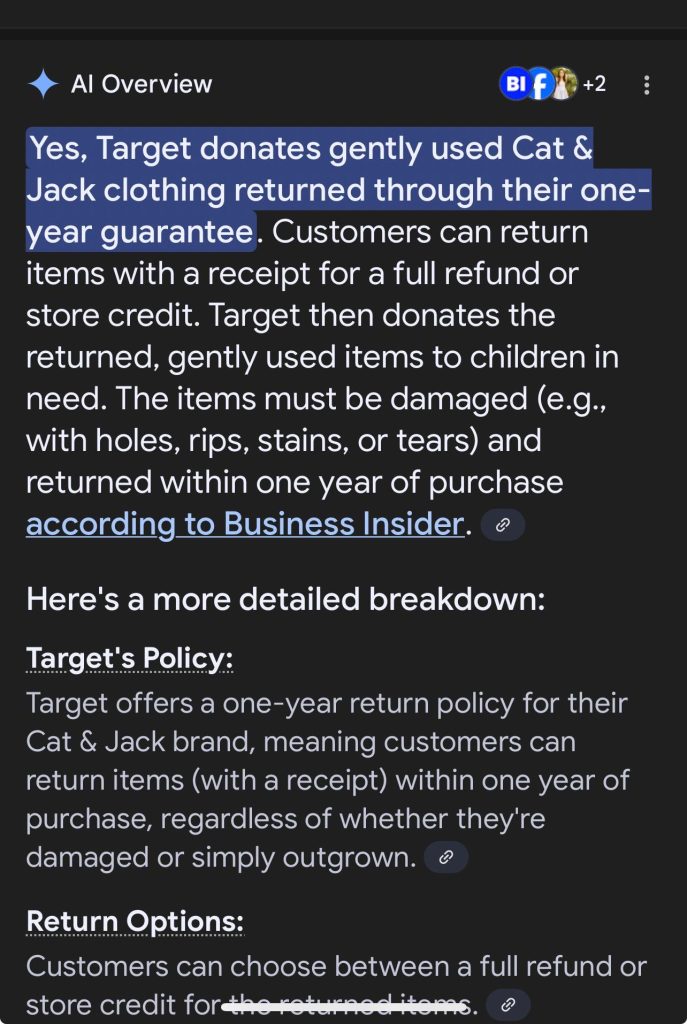
Have you ever wondered what happens to the clothes you return at Cat and Jack? You’re not alone.
When you send back a shirt or pair of pants, it’s natural to ask if those items just disappear or get wasted. Understanding what Cat and Jack does with returned clothes can give you peace of mind and even inspire you to shop more confidently.
Keep reading to discover how your returned clothes find a new purpose—and how this process benefits you, the environment, and the community.

Credit: www.reddit.com
Cat And Jack Return Policy
Cat And Jack offers a clear return policy to make returns easy for customers.
This policy explains how to return clothes and what happens to them after.
How Returns Are Handled
When customers return Cat And Jack clothes, the items go through a careful process.
Returned clothes are checked for quality and condition before any further action.
- Items in good condition may be restocked or donated.
- Damaged or worn clothes are recycled or discarded.
- Returns are processed quickly to update inventory.
Timeframe For Returns
Customers should return Cat And Jack clothes within 90 days of purchase.
Returns after 90 days may not be accepted or could receive store credit only.
| Return Period | Type of Refund |
| Within 90 days | Full refund or exchange |
| After 90 days | Store credit (subject to approval) |
Condition Requirements
Returned clothes must meet specific condition rules to qualify for a refund.
- Clothes should be clean and unworn.
- Tags must still be attached to the items.
- Items should not show signs of damage or use.
- Any special care instructions must be followed before return.

Credit: www.reddit.com
Sorting Returned Clothes
Cat and Jack sorts returned clothes carefully. This helps them decide what to do with each item.
The sorting process makes sure usable clothes go back to shelves. Damaged clothes are removed.
Inspection Process
First, every returned item gets a close look. Staff check for stains, tears, and missing parts.
- Look for holes or rips
- Check if buttons or zippers work
- Inspect for dirt or marks
- Verify the label and size
Separation Of Usable Items
After inspection, clothes that pass go into a separate group. These can be cleaned and resold.
| Condition | Action |
| Like New | Return to store shelves |
| Minor Wear | Sent for cleaning and repair |
| Major Damage | Discard or recycle |
Discarding Damaged Products
Clothes that are too damaged cannot be sold. These items are removed from inventory.
- Items with large tears or holes
- Clothes with permanent stains
- Products missing key parts
- Clothes that fail safety checks
Reselling Returned Items
Cat and Jack handles returned clothes in smart ways to reduce waste. They resell these items to reach more customers.
This process helps keep good clothes in use instead of throwing them away.
Discounted Sales
Returned clothes often go on sale at lower prices. These sales happen in stores or outlets.
Shoppers get quality items for less. This way, returned clothes find new owners quickly.
Online Resale Platforms
Cat and Jack uses online platforms to sell returned clothes. These sites show items to many buyers.
- Items are checked for quality before listing
- Prices are set lower than new products
- Buyers can find good deals easily
Donation Channels
Some returned clothes get donated to charity groups. This helps people in need.
| Donation Channel | Type of Clothes | Purpose |
| Local Shelters | Warm clothes | Help homeless people |
| Community Centers | Kids’ clothes | Support families |
| Nonprofit Groups | Varied items | Distribute to low-income areas |

Credit: www.reddit.com
Recycling And Sustainability Efforts
Cat and Jack take back returned clothes to help the environment. They work to reuse and recycle fabrics. This effort reduces waste and saves resources.
The brand focuses on ways to lower the impact of clothing on nature. Their programs support cleaner and greener production.
Fabric Recycling Programs
Returned clothes go through special recycling programs. These programs sort items to find those fit for reuse or recycling. Clothes that cannot be resold get turned into new materials.
- Sorting returned clothes by type and condition
- Cleaning and processing fabrics
- Transforming old clothes into fibers for new products
- Reducing landfill waste through reuse
Environmental Impact Reduction
Cat and Jack cut down pollution by recycling fabrics. They lower water and energy use in making new clothes. Reusing materials saves natural resources and cuts carbon footprints.
| Impact Area | Before Recycling | After Recycling |
|---|---|---|
| Water Use | High | Low |
| Energy Consumption | High | Reduced |
| Waste to Landfill | Large Amounts | Minimal |
| Carbon Emissions | Significant | Lowered |
Partnerships With Recycling Firms
Cat and Jack work with experts to recycle returned clothes. These firms help break down fabrics safely. They turn old textiles into new materials for other uses.
- Collaborate with certified textile recyclers
- Use advanced recycling technologies
- Create closed-loop systems for fabric reuse
- Support community recycling initiatives
Customer Impact And Transparency
Cat and Jack handles returned clothes with care. They focus on clear communication and honest practices.
Understanding their return process helps customers trust the brand and feel confident shopping.
Communication About Returns
Cat and Jack informs customers about return policies clearly. They explain how to return items and what happens next.
They provide updates on return status. This keeps customers aware and reduces confusion.
- Clear instructions on how to return clothes
- Regular updates during the return process
- Easy-to-find return policy on their website
Effect On Pricing
Returned clothes are checked to see if they can be resold. Items in good condition may be sold at a lower price.
This helps keep prices fair for customers. It also reduces waste by giving clothes a second chance.
- Inspected clothes may be discounted
- Damaged items are recycled or donated
- Pricing reflects the condition of returned clothes
Corporate Responsibility
Cat and Jack cares about the environment and community. Returned clothes are sorted to reduce waste and support good causes.
They work to recycle fabrics and donate usable clothes. This shows their commitment to social and environmental responsibility.
- Recycling damaged fabrics
- Donating clothes in good condition
- Reducing landfill waste
Frequently Asked Questions
What Happens To Cat And Jack Returned Clothes?
Cat and Jack inspects returned clothes for quality. Items in good condition are restocked or donated. Damaged clothes are recycled responsibly to reduce waste.
Does Cat And Jack Donate Returned Clothing?
Yes, Cat and Jack donates suitable returned clothes. They partner with charities to help children in need. This supports their commitment to community and sustainability.
How Does Cat And Jack Recycle Returned Clothes?
Cat and Jack recycles damaged returned clothes through textile recycling programs. This process reduces landfill waste and promotes eco-friendly practices. It helps conserve resources and supports environmental responsibility.
Can Returned Cat And Jack Clothes Be Resold?
Returned clothes in excellent condition may be resold. They undergo thorough inspection to ensure quality and safety. This practice helps reduce waste and benefits consumers with affordable options.
Conclusion
Cat and Jack handle returns with care and responsibility. They recycle or donate returned clothes. This reduces waste and helps communities. Their approach supports a sustainable future. Customers appreciate their commitment to the environment. It builds trust and loyalty. Choosing Cat and Jack means supporting eco-friendly practices.
This benefits everyone. Next time you shop, consider their values. It’s a choice for a greener planet. A small step towards big change. Let’s make conscious decisions together. Cat and Jack lead by example. A brand that cares.