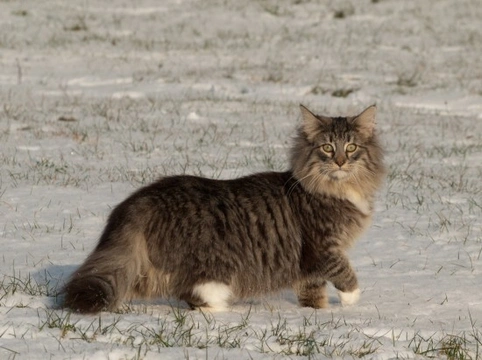
Have you ever wondered which domestic cat holds the title of the largest breed? If you’re curious about the gentle giant that might be sharing your home or if you’re thinking about adding a big furry friend to your family, this article is just for you.
Discover the surprising size, personality, and care needs of the biggest domestic cats. By the end, you’ll know exactly what makes these cats stand out—and if one could be the perfect match for you. Keep reading to find out which breed takes the crown for the largest domestic cat!

Credit: worldanimalfoundation.org
Giant Cat Breeds
Some domestic cats grow much larger than typical house cats. These big cats are friendly and make great pets.
Let’s learn about the largest domestic cat breeds and what makes them special.
Maine Coon
The Maine Coon is one of the largest domestic cat breeds. It has a long, thick coat and a bushy tail.
These cats are strong and can weigh up to 18 pounds or more. They are gentle and good with families.
Savannah Cat
The Savannah Cat is a mix between a domestic cat and a wild serval. It is tall and lean with spotted fur.
They can grow very large, sometimes over 20 pounds. Savannah Cats are active and love to play.
Norwegian Forest Cat
The Norwegian Forest Cat has a thick double coat that keeps it warm in cold weather. It is a large, muscular cat.
These cats can weigh up to 16 pounds. They are friendly, calm, and enjoy climbing trees.
Chausie
The Chausie is a hybrid cat from crossing domestic cats with wild jungle cats. It is tall and slim.
Chausies can weigh between 15 and 20 pounds. They are active and need lots of space to move around.
Size Comparisons
The largest domestic cat breed is famous for its impressive size. Comparing this breed to others shows how big it really is. This helps cat lovers understand their size better.
Knowing the size differences helps when choosing a cat. It also shows how much space and care a large cat needs.
Weight Range
The largest domestic cats weigh much more than typical house cats. Their weight can vary based on age, diet, and genetics.
Adult males often weigh more than females. This breed can weigh almost twice as much as average cats.
- Average domestic cat: 8-10 pounds
- Largest breed males: 15-25 pounds
- Largest breed females: 12-18 pounds
Length And Height
The length and height of this breed are also larger than most cats. They have longer bodies and taller legs.
Length is measured from nose to tail tip. Height is measured at the shoulder.
| Breed | Length (inches) | Height (inches) |
|---|---|---|
| Average domestic cat | 18-20 | 9-10 |
| Largest breed | 25-40 | 12-16 |
Growth Patterns
This breed grows for a longer time than regular cats. They reach full size at around 3 to 4 years old.
Growth is steady and can vary by individual cat. Male cats usually grow bigger and longer than females.
- Normal cats finish growing by 1 year
- Largest breed grows until 3-4 years
- Males grow larger than females
Physical Traits
The largest domestic cat breed is known for its impressive size and unique physical traits. These cats stand out with their strong bodies and distinct features.
Understanding their body structure, coat characteristics, and facial features helps identify this giant breed easily.
Body Structure
This breed has a large and muscular body. Males can weigh up to 20 pounds or more. Their strong bones support their heavy frame.
They have long legs and a broad chest. Their tail is thick and medium to long in length, adding to their balanced look.
Coat Characteristics
The coat of the largest domestic cat is thick and dense. It feels soft but is also water-resistant. This helps them stay warm and dry.
The fur is usually medium to long in length. Many have a beautiful pattern with stripes or spots, which adds to their wild appearance.
- Thick, dense fur
- Medium to long length
- Water-resistant
- Striped or spotted patterns
Facial Features
This breed has a broad head with high cheekbones. Their eyes are large and expressive, often green or gold in color.
They have large, tufted ears that help with hearing. Their whiskers are long and thick, giving a strong sense of touch.
Personality And Temperament
The largest domestic cat breed is known for its unique personality. Their temperament makes them stand out among other cats.
Understanding their behavior helps owners give the best care. Let’s explore their main traits, social habits, and activity levels.
Behavioral Traits
These cats are gentle giants. They often show calm and patient behavior. Their size does not make them aggressive.
- Friendly and affectionate with family members
- Patient with children and other pets
- Curious but not overly active
- Enjoy quiet and comfortable spaces
Social Interaction
They like to be near people but are not clingy. These cats enjoy gentle petting and attention on their terms.
| Social Behavior | Description |
| With Family | Warm and loyal |
| With Strangers | Shy but not scared |
| With Other Pets | Generally friendly |
Activity Levels
These cats are playful but do not require constant exercise. They like short play sessions followed by rest.
Typical daily activity includes:
- Short bursts of play with toys
- Exploring their environment slowly
- Long naps in cozy spots
- Quiet observation from a favorite perch
Care Needs
The largest domestic cat breed needs special care. Their size affects their diet, exercise, and health.
Understanding their care needs helps keep them healthy and happy. Let’s look at key areas to focus on.
Diet And Nutrition
Large domestic cats need balanced diets rich in protein. Their meals must support strong muscles and energy.
Avoid overfeeding to prevent obesity, which strains their joints and heart. Fresh water should always be available.
- High-quality dry or wet cat food with real meat
- Controlled portions to match their size and activity
- Supplements like omega-3 for coat and joint health
- Regular feeding times to keep digestion steady
Exercise Requirements
Large cats need daily exercise to stay strong and avoid weight gain. Playtime helps keep their muscles toned.
Interactive toys and climbing areas encourage movement. Outdoor time is good if the area is safe and secure.
- Use toys like feather wands and laser pointers
- Create climbing shelves or cat trees for activity
- Schedule play sessions twice a day for 15-20 minutes
- Supervised outdoor walks or safe enclosures if possible
Health Concerns
Large domestic cats can face health issues like joint problems and heart disease. Regular vet visits are important.
Early detection helps treat illnesses quickly. Watch for signs of discomfort or changes in behavior.
- Joint pain and arthritis due to heavy weight
- Heart conditions common in larger breeds
- Obesity risk from overeating or lack of exercise
- Regular dental care to prevent infections

Credit: headsupfortails.com
Choosing The Right Giant Cat
Large domestic cats need special care and attention. Choosing the right giant cat means thinking about your home and lifestyle.
The largest domestic cat breeds, like the Maine Coon, need space and family support. Learn how to pick the best fit for you.
Living Space Considerations
Big cats need room to move and play. Small apartments may feel crowded for large breeds.
Provide vertical spaces like cat trees. This helps them stay active and happy indoors.
- Ensure enough floor space for running
- Add climbing areas to save floor room
- Keep litter boxes clean and accessible
Compatibility With Families
Large cats can be gentle and friendly with kids. Teach children how to handle cats with care.
Some big cats like Maine Coons are social and enjoy family time. Others may prefer quiet and calm homes.
- Choose a breed that matches your family’s energy
- Supervise kids when playing with cats
- Respect the cat’s need for alone time
Adoption Tips
Adopt from shelters or breed-specific rescues. This helps you find healthy, well-socialized cats.
Ask about the cat’s history and behavior before adoption. This prepares you for a smooth transition.
- Visit the cat several times before adopting
- Check for signs of good health and activity
- Prepare your home with food, toys, and space

Credit: www.reddit.com
Frequently Asked Questions
What Is The Largest Domestic Cat Breed?
The Maine Coon is the largest domestic cat breed. It can weigh between 13 to 18 pounds or more. Known for its friendly nature, it has a muscular build and long, thick fur.
How Big Can A Maine Coon Cat Grow?
Maine Coons can grow up to 40 inches in length. Their height ranges from 10 to 16 inches. This breed is also known for having a large, bushy tail.
Are Maine Coons Bigger Than Other Cat Breeds?
Yes, Maine Coons are significantly larger than most domestic cat breeds. Their size exceeds breeds like the Siamese or Persian. Their weight and length make them the largest domestic cats.
Do Large Domestic Cats Require Special Care?
Large cats like Maine Coons need more food and space. Regular grooming is essential due to their thick fur. They also benefit from regular veterinary check-ups to stay healthy.
Conclusion
Discovering the largest domestic cat breed is fascinating. Maine Coons often take the crown. They are huge and friendly. These gentle giants captivate cat lovers. Their size and personality make them unique. Perfect for families seeking a big, loving pet.
Remember, every cat is special, regardless of size. Choosing the right breed depends on your lifestyle. Consider your living space and time. Cats bring joy in many sizes. So, whether large or small, they offer endless affection and companionship. Explore different breeds and find your perfect feline friend.
Enjoy the journey!