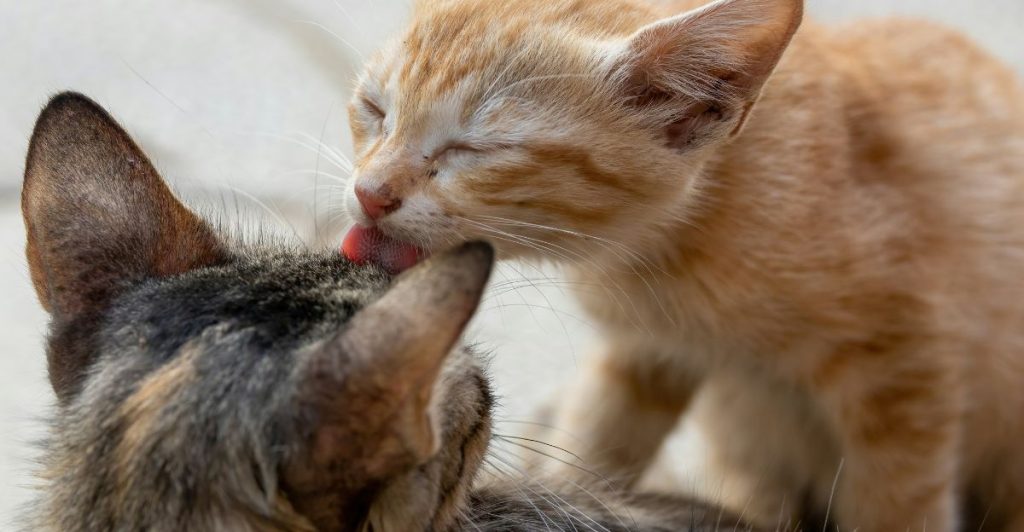
Have you ever noticed your cat licking another cat or even you, and wondered what it really means? Is it just a sign of affection, or could it be a way your cat shows dominance?
Understanding your cat’s grooming habits can reveal a lot about their social behavior and how they communicate with those around them. If you want to decode your feline friend’s actions and strengthen your bond, keep reading. You might be surprised by what grooming really tells you about your cat’s place in the social circle.

Credit: www.reddit.com
Grooming Behavior In Cats
Cats spend a lot of time grooming themselves and others. Grooming helps them stay clean and calm. It also shows social bonds.
Some people wonder if cats groom to show dominance. Grooming can mean different things depending on the situation.
Types Of Grooming
Cats groom in several ways to keep clean and healthy. Self-grooming is the most common type. Cats lick their fur to remove dirt and loose hair.
Cats also groom other cats. This is called social grooming or allogrooming. It helps build trust and friendship between cats.
- Self-grooming: Licking their own fur and paws
- Social grooming: Licking other cats to bond
- Maternal grooming: Mother cats clean their kittens
- Stress grooming: Grooming to relax or calm down
Social Grooming Patterns
Social grooming shows care and friendship in cats. Cats groom those they trust and like. It helps reduce tension in groups.
Dominance does not usually show in grooming. Instead, cats use grooming to share warmth and build bonds. Grooming often happens between cats close in rank.
- Grooming usually happens between familiar cats
- Dominant cats may receive more grooming than give
- Grooming helps keep peace in cat groups
- It strengthens social ties and reduces stress
Signs Of Dominance In Feline Groups
Cats show dominance in their groups in many ways. Grooming is one sign, but there are other clear signals too.
Understanding these signs helps us know how cats live and interact with each other.
Body Language Cues
Dominant cats use body language to show their rank. They hold their tails high and stare directly at others.
- Standing tall with ears forward
- Slow blinking to show calm confidence
- Keeping other cats at a distance with a stare
- Grooming others to show control
Territorial Marking
Dominant cats mark their area to warn others. They use scent glands on their face and paws.
| Marking Type | Purpose | Where Found |
|---|---|---|
| Rubbing face | Leave scent | Furniture, walls |
| Scratching | Leave claw marks and scent | Posts, trees |
| Spraying urine | Strong territory signal | Vertical surfaces |
Feeding Order
In groups, dominant cats eat first. Submissive cats wait or eat less.
- Dominant cat approaches food first
- Other cats wait their turn
- Lower rank cats eat smaller amounts
- Feeding order shows social rank clearly
Role Of Grooming In Feline Hierarchy
Grooming plays an important role in how cats interact. It helps cats build bonds and shows their place in the group. Understanding grooming can explain cat behavior better.
Cats do not only clean themselves. They also groom each other to communicate. This behavior shows friendship, respect, and sometimes power.
Allogrooming And Bond Strength
Allogrooming means one cat grooming another. It helps cats feel close and safe. Cats that groom often trust each other more.
- Reduces stress between cats
- Creates strong social bonds
- Improves group harmony
- Shows care and affection
Grooming As A Dominance Display
Dominant cats often groom others to show control. The cat being groomed usually accepts this. It is a way to keep peace and order without fighting.
| Dominant Cat Behavior | Submissive Cat Behavior |
|---|---|
| Initiates grooming | Allows grooming |
| Grooms head and neck areas | Grooms less dominant parts |
| May lick longer and more often | Remains calm and passive |
Reciprocal Grooming Dynamics
Cats often groom each other back and forth. This shows equal status or friendship. The balance of grooming helps keep good relationships.
- Cat A grooms Cat B
- Cat B returns grooming to Cat A
- Both cats stay calm and relaxed
- Trust and bond get stronger
Case Studies And Observations
Cats often groom each other, called allogrooming. This behavior can show care or social status.
Researchers studied cats to see if grooming shows dominance or friendship. Observations reveal patterns.
Multi-cat Household Behavior
In homes with several cats, grooming helps build bonds. Sometimes, higher-ranked cats groom lower-ranked ones.
Dominant cats may start grooming to show control. Submissive cats often accept grooming without returning it.
- Dominant cats groom first or more often
- Submissive cats groom less or wait their turn
- Grooming can stop fights and ease tension
- Sometimes grooming is a way to assert power
Wild Feline Group Interactions
Wild cats, like lions, use grooming to keep social order. Leaders groom others to show their status.
Grooming in wild groups also helps with hygiene and group unity. Lower-ranked cats often groom leaders.
- Alpha cats groom to maintain dominance
- Group grooming strengthens social bonds
- Subordinate cats groom leaders to show respect
- Grooming reduces stress in the group
Implications For Cat Owners
Cats often groom each other to show care and build bonds. Grooming can also show dominance in some cases.
Understanding how grooming affects cat behavior helps owners manage their pets better. This is important in homes with more than one cat.
Managing Multi-cat Conflicts
Grooming may sometimes be a way for one cat to assert control over another. This can cause stress or conflicts in a multi-cat home.
- Watch for signs of forced grooming or refusal to groom back.
- Provide separate feeding and resting areas for each cat.
- Give each cat its own toys and scratching posts.
- Use calm and gentle handling during conflicts.
- Consult a vet or animal behaviorist if conflicts persist.
Encouraging Positive Social Bonds
Encouraging friendly grooming helps cats feel safe and connected. Owners can support good social behavior with simple steps.
| Action | Benefit |
| Offer shared playtime | Builds trust between cats |
| Provide cozy shared resting spots | Encourages calm togetherness |
| Reward gentle grooming | Reinforces positive behavior |
| Keep a calm home environment | Reduces stress and aggression |
Credit: basepaws.com

Credit: basepaws.com
Frequently Asked Questions
Do Cats Groom To Show Dominance Over Others?
Cats sometimes use grooming to assert dominance, but it mainly builds social bonds. Dominant cats may groom others more often to display control and care within their group.
How Does Grooming Indicate A Cat’s Social Rank?
Grooming frequency and initiation can reflect a cat’s social status. Higher-ranking cats often groom lower-ranking ones to reinforce hierarchy and strengthen relationships.
Can Grooming Be A Sign Of Affection, Not Dominance?
Yes, grooming is primarily a sign of affection and trust. Cats groom each other to show friendship, comfort, and to maintain group harmony.
Do Cats Groom Less When Stressed Or Submissive?
Stressed or submissive cats may groom less or avoid grooming dominant cats. Grooming behavior often decreases when a cat feels anxious or threatened.
Conclusion
Understanding cat grooming behavior offers insights into feline social dynamics. Cats may groom each other to express affection. This can also indicate dominance. It’s part of their complex communication. Observing these interactions can strengthen your bond with your pet. Recognizing their signals helps in better care.
Cats have unique personalities. Each one communicates differently. Pay attention to their grooming habits. It reveals more than you think. Knowledge of their behavior enhances your relationship. It makes living with cats more enjoyable. Keep observing, learning, and appreciating your feline friend.
Their actions speak volumes.