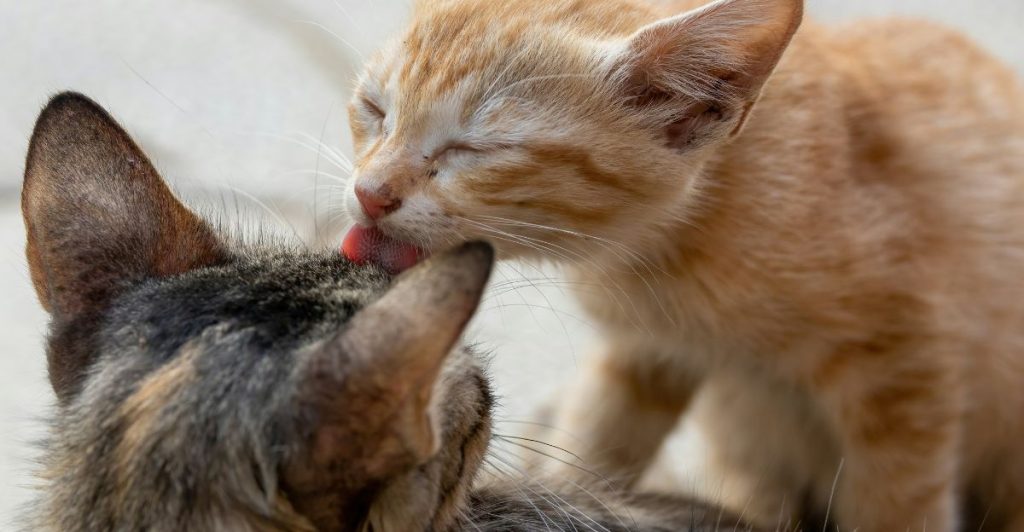
Have you ever noticed your cat licking another cat or even you and wondered why? Is it just about keeping clean, or is there something more behind that grooming behavior?
You might be surprised to learn that when cats groom, it’s not always about hygiene. Sometimes, your furry friend uses grooming as a way to show dominance or establish social order. Understanding this hidden message can change the way you see your cat’s actions and help you build a stronger bond with them.
Keep reading to discover the fascinating reasons behind your cat’s grooming habits and what they really mean.

Credit: basepaws.com
Cat Grooming Habits
Cats spend a lot of time grooming themselves. Grooming keeps their fur clean and healthy.
Some people wonder if cats groom to show dominance. Grooming is mostly about care and comfort.
Daily Grooming Routine
Cats groom themselves several times a day. They lick their fur to remove dirt and loose hair.
This grooming helps cats stay cool and reduces stress. It also spreads natural oils on their fur.
- Start with licking their paws
- Use paws to clean face and ears
- Lick the back and sides of the body
- Finish by cleaning the tail
Grooming Tools Cats Use
Cats use their tongue as their main grooming tool. Their tongues have tiny rough bumps called papillae.
These bumps act like a comb. They help cats remove dirt and loose fur while grooming.
- Rough tongue to clean fur and skin
- Paws to wipe face and ears
- Teeth to nibble hard-to-reach areas
Social Grooming In Cats
Cats often groom themselves to stay clean. But grooming can also be a way cats connect with each other.
Social grooming helps cats build strong bonds and show trust. It is more than just cleaning.
Allogrooming Among Cats
Allogrooming is when cats groom each other. This usually happens between cats that live together or are friends.
- It helps remove dirt and parasites from hard-to-reach spots.
- Cats lick areas like the head and neck that they cannot reach themselves.
- This behavior shows acceptance and reduces tension among cats.
- Allogrooming often happens after play or rest to strengthen bonds.
Bonding Through Grooming
Grooming builds trust and friendship between cats. It is a gentle way to show care.
| Grooming Behavior | What It Means |
| Licking around the face | Trust and affection |
| Grooming the ears | Close friendship |
| Mutual grooming | Strong social bond |
| Grooming to calm | Reduces stress |
Grooming And Dominance
Cats use grooming to communicate many feelings and intentions. One question is if cats groom to show dominance over others.
Understanding grooming and dominance helps explain some cat behaviors. These actions reveal how cats interact socially.
Signs Of Dominance In Cats
Dominant cats often show specific signs to other cats. These signs help set clear social ranks within a group.
- Staring without blinking to show control
- Standing tall and making themselves look bigger
- Blocking access to food or resting places
- Marking territory with scent glands
- Initiating grooming of other cats
Grooming As A Dominance Display
Grooming another cat can be a way to show dominance. It is a gentle way to say who is in charge.
| Grooming Action | Meaning |
| One cat licking another’s head | Shows care but also control |
| Dominant cat starts grooming first | Sets the social order |
| Submissive cat returns grooming | Acknowledges the leader |
| Grooming stops suddenly | Signal to end interaction |

Credit: basepaws.com
Other Reasons Cats Groom
Cats do not groom only to show dominance. Grooming has many important reasons.
Understanding these reasons helps us care better for our pets.
Stress And Comfort Grooming
Cats groom to calm themselves when they feel stressed or scared. Grooming helps them feel safe.
When a cat is nervous, licking fur can reduce anxiety and give comfort.
Health And Hygiene Benefits
Grooming keeps a cat’s coat clean and free from dirt. It also removes loose fur and prevents mats.
Grooming helps control parasites like fleas and keeps skin healthy.
Interpreting Grooming Behavior
Cats groom themselves often. This behavior helps them stay clean and calm. Sometimes, grooming can mean more than just hygiene.
Understanding why cats groom each other can tell us about their social bonds and feelings. It may show care, stress, or even dominance.
Contextual Clues
Look at where and how cats groom to understand their meaning. Grooming on the head or neck often shows trust. Grooming around sensitive areas might show control or dominance.
- Grooming during play usually means friendship.
- If one cat grooms another and the other stays still, it may show submission.
- Grooming that stops fights can be a peace signal.
- Excessive grooming might mean stress or discomfort.
Individual Cat Personalities
Each cat has its own grooming style. Some cats like to groom more. Others groom less or only in certain situations.
| Personality Type | Grooming Behavior | Possible Meaning |
|---|---|---|
| Dominant Cat | Grooms others often | Shows control or care |
| Submissive Cat | Allows grooming easily | Signals trust or submission |
| Independent Cat | Grooms self mostly | Prefers personal space |
| Anxious Cat | Grooms excessively | May be stressed |
Credit: basepaws.com
Tips For Cat Owners
Cats groom themselves to stay clean and healthy. Sometimes grooming can show their feelings or social rank.
Understanding your cat’s grooming habits helps you support their well-being. Here are tips for healthy grooming and knowing when to see a vet.
Encouraging Healthy Grooming
Grooming keeps cats’ fur clean and skin healthy. It also reduces stress and shows care between cats.
- Brush your cat regularly to remove loose fur.
- Provide a calm place for grooming sessions.
- Offer treats to make grooming positive.
- Watch for changes in grooming habits.
- Keep your cat’s claws trimmed to prevent injury.
When To Consult A Vet
Over-grooming or no grooming can signal health problems. Look for skin redness, bald spots, or wounds.
| Sign | Possible Cause | Action |
|---|---|---|
| Hair loss | Allergies or parasites | Visit vet for diagnosis |
| Excessive licking | Stress or pain | Monitor and consult vet |
| Skin sores | Infection or injury | Seek vet care immediately |
| Change in grooming | Illness or discomfort | Schedule vet checkup |
Frequently Asked Questions
Do Cats Groom To Show Social Dominance?
Cats sometimes groom others to show social dominance. This behavior establishes hierarchy within a group. Dominant cats may groom subordinates to assert control and bond simultaneously.
Can Grooming Be A Sign Of Affection In Cats?
Yes, grooming is also a sign of affection. Cats groom each other to strengthen social bonds and express trust and comfort.
How Does Grooming Relate To Cat Hierarchy?
Grooming helps maintain social hierarchy in multi-cat groups. Dominant cats often initiate grooming to reinforce their status.
Is Grooming A Way Cats Reduce Stress?
Grooming reduces stress by releasing endorphins. It calms cats and promotes relaxation, especially when done socially.
Conclusion
Cats groom for various reasons, including showing dominance. They communicate through grooming behaviors. Understanding this can help in better pet care. Cats may groom to strengthen social bonds. Or, to assert hierarchy among peers. Observing these actions can reveal much about their world.
It helps owners understand feline behavior better. Recognizing these patterns can improve human-cat relationships. Always watch your cat’s grooming habits closely. It tells a story about their social standing. And their comfort level with their environment. This insight is essential for any cat lover.
It deepens the connection with these fascinating creatures.