
Does your cat suddenly lash out or act aggressively without warning? It can be confusing and even scary when your usually calm pet starts biting, scratching, or growling.
You want to keep both yourself and your cat safe, but you might not know where to start. The good news is, understanding why your cat behaves aggressively and learning simple ways to manage this behavior can make a huge difference.
You’ll discover effective, easy-to-follow tips to help calm your cat and restore peace in your home. Keep reading to find out how you can turn aggression into trust and strengthen the bond with your furry friend.
Credit: justcatsclinic.com
Causes Of Aggressive Behavior
Aggressive behavior in cats can confuse and worry their owners. Understanding why cats act this way helps in managing their behavior.
Many factors cause aggression. These include triggers in their environment, health problems, and other conditions.
Common Triggers
Cats may show aggression because of certain triggers. These triggers make them feel scared or threatened.
- Sudden loud noises
- Strangers or other animals nearby
- Unfamiliar smells or changes in the home
- Rough play or handling
- Feeling cornered or trapped
Health Issues
Health problems can cause pain or discomfort. This often leads cats to act aggressively.
| Health Issue | Possible Effect |
| Dental pain | Growling or biting when touched |
| Infections | Increased irritability |
| Arthritis | Reduced tolerance for handling |
| Skin allergies | Scratching and biting at skin |
Environmental Factors
The cat’s surroundings affect its mood and behavior. Changes or stress in the environment can cause aggression.
Some environmental causes include:
- Moving to a new home
- New pets or family members
- Dirty litter boxes
- Lack of hiding places
- Too little play or mental stimulation
Recognizing Aggression Signs
Understanding when a cat shows aggression helps keep everyone safe. Cats use many signs to show they feel threatened or upset.
Recognizing these signs early can prevent bites or scratches. Watch your cat closely to learn their signals.
Body Language
Cats use their bodies to show how they feel. Aggressive cats often have stiff postures and move carefully.
Watch for signs like raised fur or a twitching tail. These can mean the cat is ready to defend itself.
- Ears flattened back against the head
- Tail puffed up or flicking rapidly
- Body stiff and tense
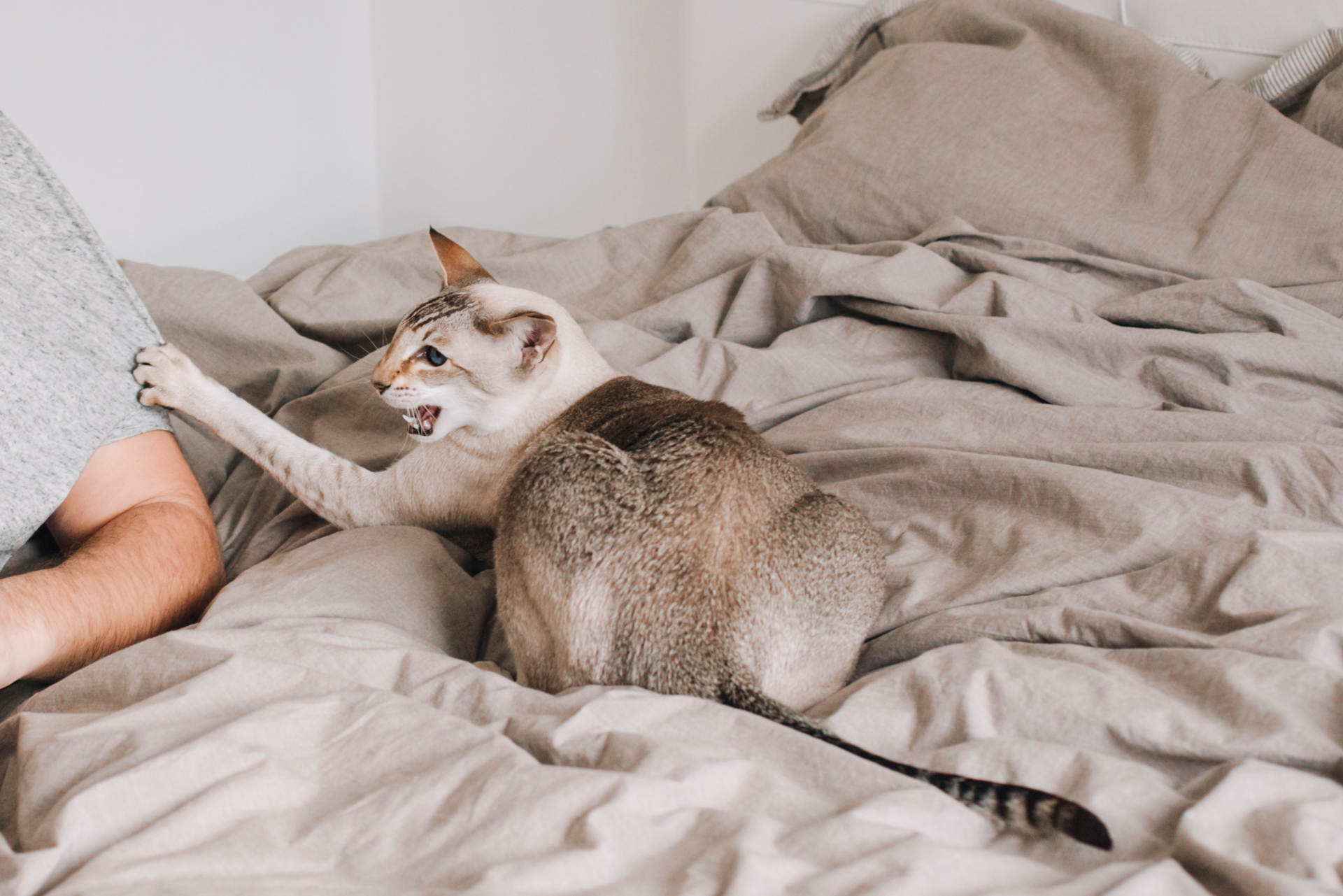
- Hissing or growling while showing teeth
- Wide open eyes with pupils narrowed
Vocal Cues
Cats use sounds to warn others. Listening to these sounds helps you know when a cat feels angry or scared.
Common aggressive sounds include loud hisses and deep growls. These noises mean the cat wants space.
- Hissing sharply to warn
- Low growling sounds
- Loud yowling or shouting
- Rapid meowing with an angry tone
Behavioral Patterns
Aggressive cats may act differently from normal. They might hide or suddenly attack without warning.
Knowing these behavior changes helps you act before aggression gets worse. Watch your cat’s habits closely.
- Sudden biting or scratching
- Hiding more than usual
- Swatting at people or other pets
- Refusing to eat or play
- Restless pacing or hiding
Safe Handling Techniques
Handling an aggressive cat requires care and patience. Using safe techniques helps avoid harm to both you and the cat.
Knowing how to approach and manage the cat can calm the situation. This guide covers key ways to handle aggressive behavior safely.
Approach Strategies
Always stay calm when you approach an aggressive cat. Move slowly and avoid direct eye contact to prevent scaring the cat.
Speak softly and use gentle body language. Let the cat see your hand before touching it to build trust.
- Keep your movements slow and steady
- Avoid staring at the cat’s eyes
- Talk in a quiet, soothing voice
- Show your hand before petting
Using Protective Gear
Wear protective gear when handling an aggressive cat. This gear helps protect you from scratches and bites.
Use thick gloves and long sleeves. A towel or blanket can also help wrap the cat safely during handling.
- Wear thick gloves to protect hands
- Use long sleeves to cover arms
- Wrap the cat in a towel or blanket
- Keep protective gear ready before handling
Avoiding Escalation
Do not punish or shout at the cat. This can make the cat more aggressive and fearful.
Give the cat space if it shows signs of stress. Stop handling if the cat becomes more aggressive or scared.
- Stay calm and patient
- Do not yell or punish
- Give the cat room to relax
- Stop if aggression increases
Behavioral Modification Methods
Aggressive behavior in cats can be managed with proper techniques. Behavioral modification helps change unwanted actions. It takes time and patience to see results.
Using positive methods encourages good behavior. You can teach your cat to be calm and friendly through careful steps.
Positive Reinforcement
Reward your cat when it behaves well. Treats, praise, or petting show your cat what you like. This makes your cat want to repeat good actions.
- Give a treat after calm behavior
- Use a soft voice for praise
- Offer playtime as a reward
- Ignore aggressive actions to avoid attention
Desensitization
Expose your cat to triggers in small steps. Start with low levels that do not cause aggression. Slowly increase exposure over time.
| Trigger | Low Level Exposure | Goal |
| Loud Noises | Soft sounds at a distance | Cat stays calm |
| Other Pets | See from another room | Cat accepts presence |
| New People | Quiet visits | Cat feels safe |
Redirecting Energy
Help your cat use its energy in healthy ways. Provide toys and play sessions to reduce aggression. This keeps your cat busy and happy.
Try these ideas to redirect energy:
- Interactive wand toys for chasing
- Catnip-filled balls to bat around
- Puzzle feeders for mental exercise
- Regular short playtimes every day
Environmental Adjustments
Adjusting your cat’s environment can help reduce aggressive behavior. Small changes make your cat feel safer and calmer.
Creating a peaceful space helps your cat relax. Reducing stress and adding fun activities can improve behavior.
Creating Safe Spaces
Safe spaces let your cat hide and rest without feeling threatened. Cats need quiet spots to feel secure.
Provide cozy beds, boxes, or high shelves where your cat can observe safely. Keep these areas away from loud noises and busy rooms.
- Use soft blankets or cushions
- Place beds in quiet corners
- Offer hiding boxes or tunnels
- Provide elevated perches for watching
Reducing Stressors
Stress can cause aggression in cats. Removing or lowering stress helps your cat stay calm.
Keep a regular routine for feeding and play. Avoid loud noises, sudden movements, and overcrowded spaces.
- Feed at the same times daily
- Limit loud sounds and sudden changes
- Give your cat alone time when needed
- Separate cats if they fight often
Providing Enrichment
Enrichment keeps your cat busy and happy. Mental and physical activities reduce boredom and aggression.
Use toys, climbing structures, and interactive play to engage your cat. Change toys often to keep interest high.
- Offer puzzle feeders for mental exercise
- Use wand toys to encourage movement
- Add scratching posts and climbing trees
- Rotate toys every few days
Credit: pethelpful.com
When To Seek Professional Help
Aggressive behavior in cats can be hard to manage alone. Knowing when to get expert help is important.
This guide explains signs that show you should contact a professional. It also covers what kind of help is available.
Veterinary Consultation
If your cat shows sudden or severe aggression, visit a vet first. Health problems may cause behavior changes.
- Check for pain or illness
- Rule out neurological disorders
- Discuss any recent changes in health
- Ask about tests or treatments
Behaviorist Intervention
A trained cat behaviorist helps find the root cause of aggression. They create a plan to change your cat’s behavior.
| Signs to See a Behaviorist | What They Do |
| Repeated attacks on people or pets | Assess triggers and stressors |
| Aggression linked to fear or anxiety | Teach coping techniques |
| Difficulty managing behavior at home | Provide training and advice |
Medication Options
Sometimes, medication can reduce aggression. Only a vet can prescribe the right drugs.
Common medications include:
- Anti-anxiety drugs
- Anti-depressants
- Hormone treatments
Medication works best with behavior therapy and vet care.
Preventing Future Aggression
Stopping aggressive behavior in cats takes time and care. You can help your cat stay calm and friendly. Knowing how to prevent future aggression is key.
Many factors can cause aggression. Focusing on social skills, daily habits, and health keeps your cat happy and less aggressive.
Early Socialization
Early socialization helps cats feel safe around people and other pets. Introduce your cat to new sights and sounds in a calm way. This builds trust and reduces fear.
- Start socializing kittens before 12 weeks old.
- Use gentle handling and soft voices.
- Let your cat explore new environments safely.
- Encourage positive play with toys and treats.
Consistent Routine
Cats feel secure with a steady routine. Feeding, playtime, and rest should happen at similar times daily. A routine lowers stress and prevents sudden aggressive outbursts.
| Activity | Suggested Time | Purpose |
|---|---|---|
| Feeding | 7:00 AM and 6:00 PM | Maintain energy and mood |
| Playtime | 10:00 AM and 4:00 PM | Reduce boredom and anxiety |
| Quiet Time | After meals | Allow relaxation and rest |
Monitoring Health
Health problems can cause aggression. Watch for signs like limping, hiding, or changes in eating. Visit the vet if your cat acts different or aggressive without reason.
Signs to watch for health issues:
- Sudden change in behavior
- Growling or hissing when touched
- Loss of appetite
- Excessive grooming or scratching
- Changes in litter box habits

Credit: justcatsclinic.com
Frequently Asked Questions
What Triggers Aggressive Behavior In Cats?
Aggression in cats can be caused by fear, pain, territorial disputes, or overstimulation. Understanding these triggers helps in managing their behavior effectively.
How Can I Safely Handle An Aggressive Cat?
Approach calmly, avoid direct eye contact, and use a soft voice. Provide space and avoid sudden movements to reduce stress.
Are There Effective Treatments For Cat Aggression?
Yes, treatments include behavior modification, environmental enrichment, and sometimes medication prescribed by a vet to reduce anxiety or pain.
Can Neutering Reduce Aggressive Tendencies In Cats?
Neutering often decreases aggression by reducing hormone-driven behaviors. It also helps in calming territorial and mating-related aggression.
Conclusion
Understanding your cat’s behavior helps improve their well-being. Addressing aggressive behavior requires patience and consistency. Always ensure your cat feels safe and secure. Positive reinforcement works wonders. Reward calm behavior with treats and affection. Consult a vet if aggression persists.
They can offer expert advice and solutions. Building a strong bond with your cat is crucial. Spend time playing and interacting daily. Observe your cat’s body language closely. This helps in identifying triggers. Remember, every cat is unique. Tailor your approach to suit their needs.
A peaceful home leads to a happy cat.