Have you ever wondered just how big the average cat really is? Whether you’re thinking about adopting a furry friend or just curious about your current pet, knowing their size can tell you a lot.
From their weight to their length, these details affect everything from what toys they enjoy to the kind of food they need. Keep reading, and you’ll discover surprising facts about cat sizes that will help you understand your feline companion better—and maybe even improve their life.
Ready to find out how big your cat should be? Let’s dive in!
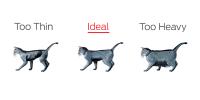
Credit: www.purina.com
Cat Size Basics
Cats come in many sizes, but most fall into a common range. Understanding their size helps with care and housing.
The size of a cat depends on breed, age, and sex. Let’s look at average measurements.
Average Weight And Length
The average domestic cat weighs between 8 to 10 pounds. Some cats are lighter or heavier.
Most cats measure about 18 inches long from nose to the base of the tail. Tail length adds more length.
- Weight: 8 to 10 pounds (3.6 to 4.5 kg)
- Body length: About 18 inches (46 cm)
- Tail length: Usually 10 inches (25 cm)
Common Size Variations
Cat sizes vary by breed and sex. Male cats are often larger than females.
Some breeds are smaller or bigger than average. For example, Siamese cats are usually slender and lighter.
- Small breeds: 5 to 8 pounds, like Singapura cats
- Large breeds: 12 to 18 pounds, like Maine Coons
- Male cats tend to weigh more than females

Credit: www.reddit.com
Factors Affecting Cat Size
Cat size varies widely across different types and conditions. Understanding what affects their size helps in caring for them better.
Several factors like breed, gender, and age play important roles in how big a cat grows. Each factor has unique influences.
Breed Differences
Cat breeds differ greatly in size. Some breeds are naturally small, while others are large and muscular.
| Breed | Average Weight (lbs) | Size Description |
| Siamese | 6-12 | Small to medium |
| Maine Coon | 13-18 | Large |
| Persian | 7-12 | Medium |
| British Shorthair | 9-17 | Medium to large |
Gender Impact
Male cats usually grow bigger than females. This difference is common in most cat breeds.
- Males have larger bodies and heavier bones
- Females tend to be lighter and more compact
- Neutering can affect growth patterns
- Hormones influence muscle and fat distribution
Age And Growth Patterns
Kittens grow quickly in their first year. Growth slows down after they reach adult size.
| Age | Growth Stage | Size Change |
|---|---|---|
| 0-6 months | Rapid growth | Body doubles or triples in size |
| 6-12 months | Slower growth | Muscle and bone development |
| 1 year and older | Adult size | Growth plate closes |
Record-breaking Cats
Cats come in many sizes, from tiny to huge. Some cats have set records for their size. These record-breaking cats show us how big or small cats can be.
This article looks at the largest cat breeds, the smallest cat breeds, and some famous giant cats known worldwide.
Largest Cat Breeds
The largest cat breeds can weigh over 20 pounds. They are big, strong, and often have long bodies and thick fur. These cats need more food and space than smaller breeds.
| Breed | Average Weight (lbs) | Notable Size |
| Maine Coon | 13 – 18 | One of the largest domestic cats |
| Siberian | 12 – 17 | Thick coat and large frame |
| Ragdoll | 15 – 20 | Heavy and muscular build |
| Savannah | 12 – 25 | Wild look with large size |
Smallest Cat Breeds
Small cat breeds are light and easy to handle. They weigh just a few pounds. These cats fit well in small homes and apartments.
- Singapura: Weighs 4 to 8 pounds, one of the tiniest breeds.
- Munchkin: Known for short legs and small size.
- Devon Rex: Small body with large ears.
- American Curl: Small to medium size with curled ears.
Famous Giant Cats
Some cats became famous for their huge size. They often hold world records or appear in news stories. These cats show how big a cat can grow.
| Name | Breed | Weight (lbs) | Record or Fame |
|---|---|---|---|
| Stewie | Maine Coon | 33 | World’s longest domestic cat |
| Arcturus Aldebaran Powers | Maine Coon | 30+ | One of the heaviest domestic cats |
| Himmy | Unknown | 46.8 | Heaviest cat ever recorded |
Comparing Domestic And Wild Cats
Cats come in many sizes and shapes. Domestic cats live with people. Wild cats live in nature.
Understanding size and behavior helps us see how these cats differ. Some wild cats are much bigger.
Size Differences
Domestic cats usually weigh between 8 and 10 pounds. They are small and easy to keep at home.
| Type of Cat | Average Weight | Length (Head to Tail) |
|---|---|---|
| Domestic Cat | 8-10 lbs | 18-20 inches |
| Bobcat (Wild) | 20-30 lbs | 30-40 inches |
| Lion (Wild) | 330-550 lbs | 8-10 feet |
| Serval (Wild) | 20-40 lbs | 30-39 inches |
Behavioral Impact
Behavior changes with size and environment. Domestic cats act differently than wild cats.
- Domestic cats are friendly and enjoy human contact.
- Wild cats hunt for food and avoid humans.
- Domestic cats sleep many hours a day.
- Wild cats roam large areas to find prey.
- Wild cats use loud sounds to mark territory.
Health And Size Correlation
The average cat varies in size, but health often links closely to weight. A cat’s size can show its health status.
Understanding the link between size and health helps owners care better for their cats.
Obesity In Cats
Obesity is a common problem in cats. It can cause serious health issues like diabetes and joint pain.
Keeping a cat at a healthy size reduces risks and improves life quality.
- Obese cats often have shorter lifespans
- Extra weight stresses bones and organs
- Obesity can cause breathing problems
Maintaining Healthy Weight
Healthy weight keeps cats active and happy. Owners should watch food portions and activity levels.
Regular vet visits help track a cat’s weight and overall health.
- Feed balanced meals in proper amounts
- Encourage daily play and exercise
- Check weight monthly to catch changes
- Consult a vet for weight concerns
Measuring Your Cat
Knowing your cat’s size helps you keep it healthy. You can measure length and weight at home. These numbers track your cat’s growth and wellbeing.
Use simple tools like a tape measure and a scale. Take care to be gentle and patient with your cat during measuring.
How To Measure Length And Weight
Measure your cat’s length by placing it on a flat surface. Use a soft tape measure from the nose to the base of the tail. Do not include the tail length.
- Lay your cat down calmly
- Stretch the tape from nose to tail base
- Record the length in inches or centimeters
- Use a scale for weight, preferably digital
- Weigh your cat when it is calm and still
For weight, place your cat on a scale. If your cat moves, try weighing yourself first, then weigh holding the cat. Subtract your weight to find your cat’s weight.
Tracking Growth Over Time
Keep a record of your cat’s length and weight. Measuring once a month works well. Tracking helps you notice any sudden changes in size or weight.
| Month | Length (cm) | Weight (kg) |
| January | 45 | 4.5 |
| February | 47 | 4.7 |
| March | 48 | 5.0 |
| April | 48 | 5.2 |

Credit: www.reddit.com
Frequently Asked Questions
What Is The Average Weight Of A Domestic Cat?
The average domestic cat weighs between 8 to 10 pounds. Weight varies by breed, age, and diet. Healthy cats maintain this range for optimal health and mobility.
How Long Is An Average Adult Cat?
An average adult cat measures about 18 inches in body length, excluding the tail. Size differs slightly among breeds but typically falls within this range.
What Is The Average Height Of A Cat At The Shoulder?
Most cats stand around 9 to 10 inches tall at the shoulder. Height depends on breed and genetics but usually remains consistent for domestic cats.
Do Male Cats Grow Bigger Than Females?
Yes, male cats are generally larger than females. Males typically weigh more and have a bigger frame due to hormonal differences.
Conclusion
Cats come in many sizes, just like their personalities. Most domestic cats weigh between 8 to 10 pounds. Their length can range from 18 to 30 inches. This includes the tail. While some breeds are small, others like the Maine Coon are large.
Regardless of size, each cat is unique and special. Knowing their average size helps care better for them. Always remember, a healthy cat is a happy cat. Keep their diet balanced and ensure regular vet visits. Understanding your cat’s size aids in providing the best care.
Love them for who they are.