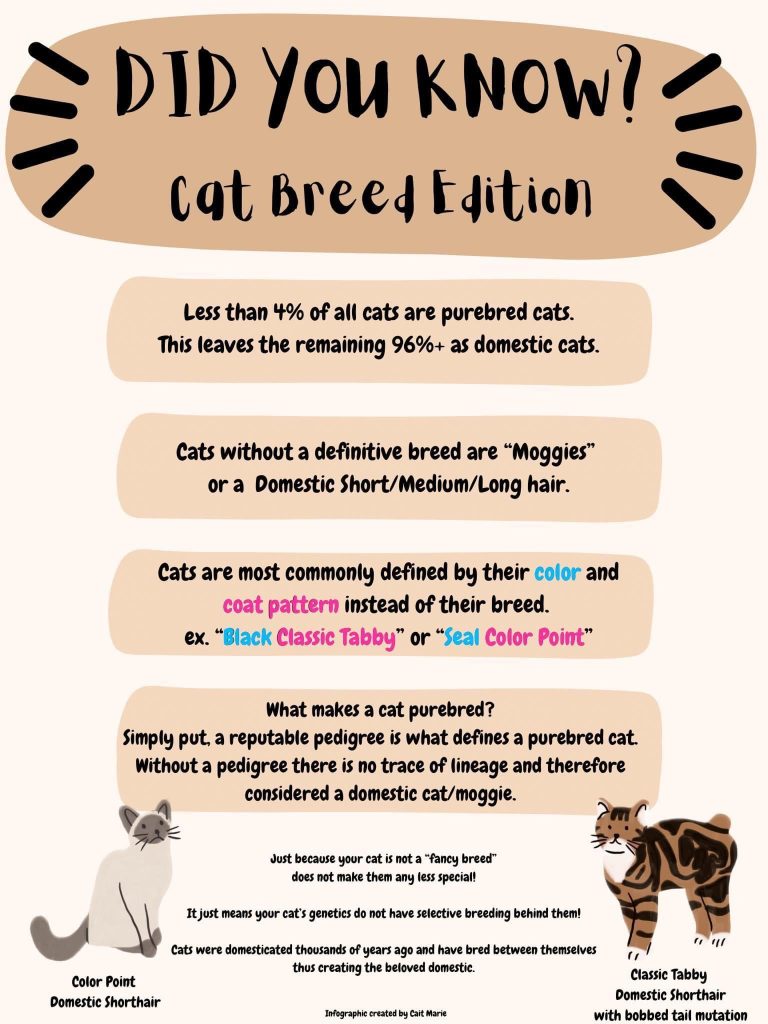
Have you ever wondered what breed your cat really is? Knowing your cat’s breed can help you understand their behavior, health needs, and personality better.
But with so many cat breeds out there, it can feel confusing and overwhelming. Don’t worry—this guide will show you simple and effective ways to discover your cat’s breed. By the end, you’ll have the knowledge to connect more deeply with your furry friend and even impress others with what you’ve learned.
Ready to find out what makes your cat truly unique? Let’s dive in!
Common Cat Breeds
Knowing your cat’s breed can help you understand its behavior and care needs. Many cats belong to popular breeds with unique looks and traits.
This guide covers common cat breeds and how to spot purebred cats by their special features.
Popular Domestic Cats
Domestic cats come in many breeds, each with its own style and personality. Some are short-haired, while others have long, fluffy coats.
Here are a few common domestic cat breeds you might see:
- Tabby:Known for striped or spotted coats with an “M” shape on the forehead.
- Siamese:Sleek cats with blue eyes and dark points on ears, face, paws, and tail.
- Maine Coon:Large and fluffy with tufted ears and bushy tails.
- Persian:Long-haired with a round face and short nose.
- Ragdoll:Big, gentle cats with blue eyes and soft, semi-long fur.
Distinctive Traits Of Purebreds
Purebred cats have clear traits that show their breed. These traits include coat color, size, and eye shape. Knowing these helps identify your cat’s breed.
Common features to look for in purebreds:
- Coat Pattern:Some breeds have unique fur patterns like the Bengal’s spots or the Siamese’s color points.
- Body Size:Maine Coons are large, while Singapura cats are small and compact.
- Eye Color:Blue eyes are common in breeds like Ragdolls and Siamese cats.
- Ear Shape:Scottish Folds have folded ears, while others have tall, pointed ears.
- Face Shape:Persians have flat faces, unlike the wedge-shaped face of Siamese cats.

Credit: apps.apple.com
Physical Features To Observe
Knowing your cat’s breed starts with looking closely at its body. Physical features tell a lot about your cat’s background.
Focus on key traits like coat, size, eyes, and ears. These details help identify the breed.
Coat Patterns And Colors
Look at your cat’s fur color and pattern. Different breeds have unique coats that stand out.
Patterns can be solid, striped, spotted, or patched. Colors range from black to white and all shades in between.
- Tabby: Stripes or swirls, often with an “M” on the forehead
- Solid: One color all over, like black or white
- Pointed: Darker ears, face, paws, and tail (like Siamese)
- Calico: White with orange and black patches
- Tortoiseshell: Mixed black and orange without white
Body Size And Shape
Measure your cat’s size and look at its body shape. Some breeds are large and muscular, others are small and slim.
Notice if your cat has a long body, short legs, or a compact build. These traits can help identify the breed.
- Large and muscular: Maine Coon, Ragdoll
- Small and slender: Siamese, Oriental
- Compact and round: British Shorthair
- Long body and short legs: Munchkin
Eye Color And Shape
Check your cat’s eye color and shape. Eye traits vary among breeds and can be distinctive.
Some cats have round eyes, others almond-shaped. Eye color includes green, blue, amber, and more.
- Round eyes: British Shorthair, Scottish Fold
- Almond-shaped eyes: Siamese, Oriental
- Blue eyes: Siamese, Ragdoll
- Green eyes: Russian Blue, Egyptian Mau
- Amber eyes: Abyssinian, Burmese
Ear Shape And Position
Look at the shape and position of your cat’s ears. Some breeds have big ears, others small or folded.
Ear tips can be pointed or rounded. The placement can be wide apart or close together.
- Large, pointed ears: Oriental, Abyssinian
- Small, rounded ears: Scottish Fold
- Folded ears: Scottish Fold
- Wide set ears: Persian
- Close set ears: Burmese
Behavioral Clues
Knowing your cat’s breed can be easier when you watch its behavior. Different breeds show unique habits and traits. These clues help you guess the breed without seeing papers.
Look at how active your cat is, how it acts with people, and how it uses its voice. These signs give hints about its breed. Let’s explore these behavior clues.
Activity Levels
Cats have different energy levels based on their breed. Some love to run and play all day. Others prefer quiet naps and slow movements. Watching your cat’s daily activity helps identify its type.
- High energy cats often chase toys and climb furniture.
- Moderate energy cats play sometimes but rest a lot.
- Low energy cats enjoy lounging and gentle petting.
Social Tendencies
Some cat breeds love being around people and other pets. They seek attention and enjoy company. Other breeds prefer to stay alone and keep distance. Watching how your cat acts with others can tell you about its breed.
| Breed Type | Social Behavior |
| Friendly Breeds | Seek human contact, playful with other pets |
| Independent Breeds | Avoid too much attention, prefer solitude |
| Mixed Traits | Show social at times, but like quiet moments too |
Vocalization Styles
Cats communicate by sounds. Some breeds are very talkative. Others are quiet and only meow softly. Listen to your cat’s vocal style to learn about its breed.
Here are common vocal styles in cats:
- Chatty:Frequent meows and varied sounds.
- Quiet:Few soft meows, mostly silent.
- Moderate:Meows only when needed, calm voice.
Using Cat Breed Identification Tools
Many cat owners want to know their cat’s breed. This can help with care and understanding their pet. Tools are available to make breed identification easier.
Two popular ways to identify cat breeds are online apps and DNA testing kits. Each method has its own benefits.
Online Breed Identifier Apps
Online apps use photos to guess your cat’s breed. You upload a picture, and the app compares it to many breeds.
- Easy to use on a phone or computer
- Results are fast, often in seconds
- Good for a quick guess or fun
- May not always be very accurate
Dna Testing Kits
DNA kits offer detailed breed information. You collect a small sample from your cat and send it to a lab for analysis.
| Feature | Online Apps | DNA Testing Kits |
| Ease of Use | Very Easy | Moderate |
| Accuracy | Medium | High |
| Cost | Usually Free or Low | Higher |
| Time for Results | Seconds | Days to Weeks |
Consulting Experts
Knowing your cat’s breed can be tricky. Experts can help you find the right answer.
Talking to specialists gives you clear information about your cat’s breed traits.
Veterinarians
Veterinarians know a lot about cat health and breeds. They can spot breed traits easily.
During a checkup, vets can tell if your cat matches certain breed characteristics.
- Check physical features like coat, eyes, and body shape
- Discuss your cat’s behavior and health history
- Ask if any breed-specific health issues apply
Cat Breeders And Enthusiasts
Cat breeders know many breeds and their traits well. They can help identify your cat’s breed.
Enthusiasts often study cat breeds deeply and can offer good advice about your cat.
- Describe your cat’s appearance and behavior in detail
- Show photos of your cat for better identification
- Ask about breed history and common traits

Credit: www.reddit.com
Common Misidentifications
Many cat owners find it hard to identify their cat’s breed. Cats often look alike. This makes it easy to mistake one breed for another.
Knowing the difference helps you understand your cat better. It also guides you on care and health needs.
Mixed Breeds Vs Purebreds
Mixed breed cats have parents from different breeds or unknown origins. Purebred cats come from a known breed with set traits.
- Mixed breeds can have a wide range of looks and sizes.
- Purebreds often have specific colors and patterns.
- Mixed breeds may be mistaken for purebreds due to similar features.
- Purebreds might show traits from ancestors that confuse identification.
Variations Within Breeds
Even within one breed, cats can look very different. This causes confusion when guessing their breed.
| Breed | Common Color Variations | Eye Color Range |
|---|---|---|
| Siamese | Seal, Blue, Chocolate, Lilac | Blue |
| Maine Coon | Brown Tabby, Black, Red, Cream | Green, Gold, Copper |
| Persian | White, Blue, Cream, Chinchilla | Blue, Copper, Green |
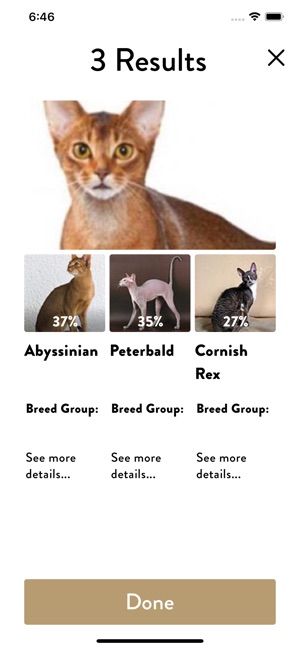
Credit: apps.apple.com
Frequently Asked Questions
How Can I Identify My Cat’s Breed At Home?
Look for physical traits like fur length, color, and patterns. Observe personality and behavior. Use online breed identification tools or apps for quick help.
What Are Common Traits Of Popular Cat Breeds?
Siamese cats have blue eyes and vocal behavior. Maine Coons are large with tufted ears. Persian cats have long fur and flat faces.
Can A Vet Help Determine My Cat’s Breed?
Yes, vets can provide breed insights based on physical exams. They might suggest DNA tests for more accurate identification.
Is Dna Testing Reliable For Cat Breed Identification?
DNA testing is highly accurate for identifying cat breeds. It analyzes genetic markers to determine ancestry and breed composition precisely.
Conclusion
Understanding your cat’s breed can be fun and rewarding. It helps you appreciate their unique traits. Each breed has its own personality and needs. Knowing this makes caring easier. Observe their appearance and behaviors closely. Use online tools for more details.
Consulting a vet can provide expert guidance too. Always remember, every cat is special. Breed knowledge is a tool to strengthen your bond. Embrace your furry friend’s uniqueness. Enjoy the journey of discovery together. Happy cat parenting!