
Are you curious about what kind of cat you have or want to find the perfect breed that matches your lifestyle? Knowing your cat’s breed can help you understand its behavior, health needs, and personality better.
But with so many breeds out there, how do you figure it out? You’ll discover simple and effective ways to identify your cat’s breed. Whether you have a new furry friend or you’re thinking about adopting, this guide will make the process easy and fun for you.
Keep reading to unlock the mystery behind your cat’s unique traits!
Common Cat Breeds
Cats come in many breeds with different looks and personalities. Knowing the breed helps you understand your cat better.
This guide covers popular domestic breeds, rare and exotic breeds, and key breed traits.
Popular Domestic Breeds
Many cats are common in homes worldwide. These breeds are easy to find and loved for their friendly nature.
- Siamese: Known for their blue eyes and talkative voice.
- Maine Coon: Large size with a thick, long coat.
- Persian: Round face with a calm and gentle personality.
- Ragdoll: Soft fur and relaxed nature, often floppy when held.
- British Shorthair: Stocky body with dense fur and quiet temperament.
Rare And Exotic Breeds
Some cat breeds are rare or come from exotic places. They often have unique features or colors.
| Breed | Origin | Notable Features |
|---|---|---|
| Sphynx | Canada | Hairless skin, large ears |
| Turkish Van | Turkey | White body with colored tail and head |
| Bengal | United States | Spotted coat similar to a leopard |
| Scottish Fold | Scotland | Folded ears giving a unique look |
Breed Characteristics
Each breed has traits like size, coat type, and personality. These help you pick a cat that fits your lifestyle.
- Coat: Short, long, curly, or hairless
- Size: Small, medium, or large
- Activity: Calm, playful, or very active
- Social: Independent or likes company
- Care: Grooming needs and health issues
Physical Traits To Observe
Finding a cat’s breed starts with looking at its physical traits. These traits can help you guess what breed your cat belongs to. Pay attention to details like coat, body shape, eyes, and ears.
Each breed has unique features. Observing these traits closely can guide you to identify the breed more easily. Let’s explore the main physical traits to check.
Coat Patterns And Colors
The coat pattern and color can tell a lot about a cat’s breed. Some breeds have specific patterns that are common to them. Look at the color shades and how the fur is marked.
- Solid colors like black, white, or gray may point to certain breeds.
- Tabby patterns include stripes, swirls, or spots in various colors.
- Tortoiseshell and calico coats show mixed patches of color.
- Pointed patterns have darker colors on the ears, face, paws, and tail.
Body Shape And Size
Body shape and size vary a lot among cat breeds. Some cats are slim and long, while others are short and sturdy. Look at the length of the legs, tail, and body.
- Large breeds like Maine Coons have big, muscular bodies.
- Small breeds like Singapura are compact and lightweight.
- Some breeds have long legs and tails, like the Siamese.
- Others have short legs and round bodies, like the Munchkin.
Eye Color And Shape
Eyes differ in color and shape based on the breed. Some cats have round eyes, while others have almond-shaped eyes. The color can be green, blue, gold, or mixed.
- Blue eyes often appear in Siamese and Ragdoll breeds.
- Green eyes are common in Russian Blue cats.
- Round eyes give a more alert expression.
- Almond-shaped eyes are typical for Oriental breeds.
Ear Shape And Placement
Look at the ears’ shape and where they sit on the head. Some breeds have large ears that stand tall. Others have small or rounded ears that sit lower on the head.
- Large, pointed ears are seen in Oriental and Siamese cats.
- Rounded ears that tilt forward are common in Scottish Folds.
- Small ears close together are a feature of the American Curl breed.
- Wide-set ears create a broader head look in some breeds.
Behavior And Personality Clues
Understanding a cat’s behavior can help you identify its breed. Each breed has unique personality traits. Watching how a cat acts gives clues to its background.
Look closely at how active the cat is, how it interacts with people, and how much it vocalizes. These hints reveal breed characteristics.
Activity Levels
Some cat breeds are very energetic and love to play all day. Others prefer to rest and enjoy quiet time. Activity level shows the cat’s energy and exercise needs.
Active cats may climb, jump, and explore often. Calm cats usually stay in one spot and move slowly. Notice how often and how fast the cat moves.
- High activity: Siamese, Abyssinian, Bengal
- Moderate activity: British Shorthair, Russian Blue
- Low activity: Persian, Ragdoll
Social Behavior
Different breeds show different ways of socializing. Some cats enjoy being with people and other pets. Others prefer to be alone or with few companions.
Watch if the cat seeks attention or likes to hide. Notice if it plays well with other animals or stays distant. These habits reflect breed tendencies.
- Highly social: Siamese, Burmese, Maine Coon
- Moderately social: Scottish Fold, American Shorthair
- Less social: Russian Blue, Persian
Vocalization Patterns
Cats speak with different sounds depending on their breed. Some breeds are very talkative and use many sounds. Others are quiet and only meow softly.
Notice how often the cat meows or purrs. Loud and frequent vocalizing can mean a talkative breed. Quiet cats tend to be more reserved.
- Talkative breeds: Siamese, Oriental Shorthair
- Moderate vocalizers: Burmese, Bengal
- Quiet breeds: Scottish Fold, Persian

Credit: www.reddit.com
Using Cat Breed Identification Tools
Finding your cat’s breed can be fun and interesting. Many tools help you identify different cat breeds.
These tools use photos, descriptions, and even DNA to give you a clear idea about your cat’s breed.
Online Breed Match Quizzes
Online quizzes ask questions about your cat’s looks and behavior. You answer simple questions to find possible breeds.
These quizzes use your answers to compare with breed traits. They give you a list of breeds that match your cat.
- Ask about fur length and color
- Include questions on eye shape and size
- Check behavior and activity levels
- Provide breed suggestions based on answers
Mobile Apps For Cat Identification
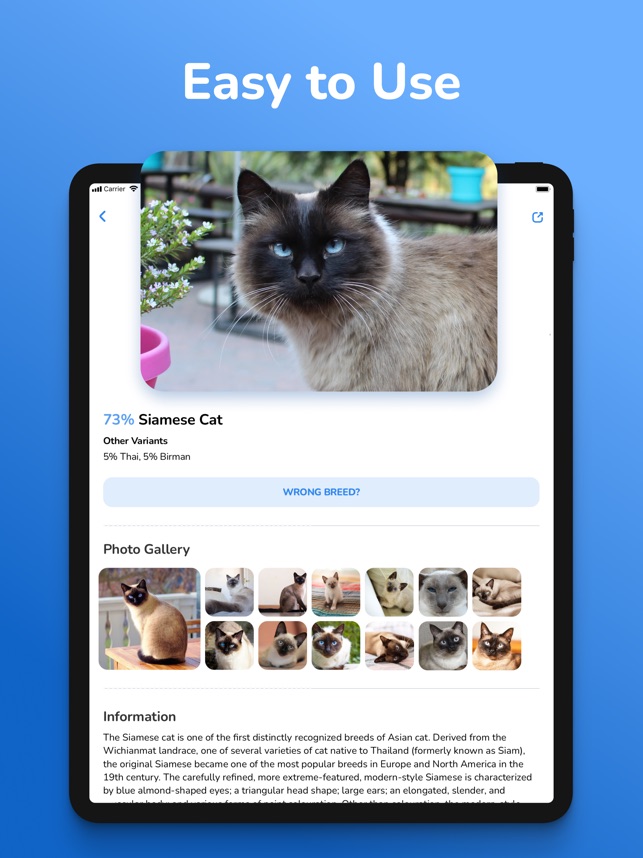
Mobile apps let you take a photo of your cat to identify its breed. They use image recognition technology for this.
Apps may also ask questions about your cat’s habits and features. They give breed matches quickly and easily.
- Use your phone camera to upload cat photos
- Get instant results with breed information
- Save breed profiles for later reference
- Learn about breed traits and care tips
Dna Testing Kits
DNA testing kits provide the most accurate breed identification. You collect a sample from your cat’s mouth.
Send the sample to a lab. They analyze the DNA and tell you your cat’s breed or mix of breeds.
- Simple cheek swab sample collection
- Mail the sample to the testing company
- Receive detailed report on breed makeup
- Learn about genetic health risks and traits
Consulting Experts
Finding your cat’s breed can be hard just by looking. Experts can help you learn more about your cat’s type.
Experts have experience and tools to identify cat breeds. They give clear answers and advice.
Veterinarians’ Role
Veterinarians know a lot about cat health and traits. They can spot breed traits during check-ups.
They can suggest tests to learn your cat’s breed. Blood tests or DNA kits help find breed details.
Cat Breeders And Clubs
Cat breeders have deep knowledge about specific breeds. They can tell breed features and history.
Cat clubs keep breed records and information. They offer resources to help you identify your cat’s breed.
- Breeders can compare your cat to breed standards
- Clubs provide breed guides and pictures
- Both can answer your breed questions
Professional Cat Shows
Cat shows display many breeds in one place. Experts there can help identify your cat’s breed.
Shows allow you to compare your cat with others. You can speak with judges and breeders for advice.
- See breed standards live
- Meet expert judges
- Ask questions about breed traits

Credit: www.reddit.com
Common Mistakes In Breed Identification
Many people try to find out their cat’s breed by looking at its features. This can be tricky and lead to errors. Knowing the common mistakes helps you avoid wrong guesses.
Identifying a cat’s breed requires care. Appearance, behavior, and reliable sources all matter. Missing these points causes confusion.
Mixing Appearance With Breed
People often think a cat’s look shows its breed. Many cats share similar colors and fur types. This makes guessing by looks alone unreliable.
For example, a long-haired cat is not always a Persian. Some mixed breeds also have long hair. Appearance does not tell the full story.
Ignoring Behavioral Traits
Cat breeds have unique behaviors and personalities. Focusing only on looks misses this important clue. Behavior helps confirm breed identity.
Some breeds are playful, while others are calm. Noticing how your cat acts can guide you. Ignoring this leads to mistakes.
- Siamese cats are vocal and social
- Maine Coons are gentle and friendly
- Russian Blues are shy and quiet
Overreliance On Online Sources
The internet has many cat breed pictures and descriptions. Relying too much on online info can cause errors. Not all sources are accurate.
Some websites mix facts with guesses. Photos may show mixed-breed cats labeled as purebreds. Always check multiple trusted sources.
Caring For Your Cat By Breed
Different cat breeds have unique needs. Knowing your cat’s breed helps you care better.
Breed-specific care supports your cat’s health and happiness. This guide covers key areas.
Dietary Needs
Cat breeds vary in energy and metabolism. Feeding the right food keeps them healthy.
Some breeds need more protein or special nutrients. Always check breed-specific diet advice.
- Active breeds like Bengals need high-protein diets
- Less active breeds need fewer calories to avoid weight gain
- Some breeds may need grain-free or sensitive stomach formulas
Grooming Tips
Different coats require different grooming routines. Regular care keeps fur clean and healthy.
Long-haired breeds need daily brushing. Short-haired cats need weekly grooming to reduce shedding.
- Persians need daily combing to prevent mats
- Siamese cats benefit from weekly brushing
- Some breeds need regular ear and nail care
Health Concerns
Each breed has common health issues. Early care can prevent problems and improve quality of life.
Learn breed-specific risks like heart or kidney problems. Regular vet checks are important.
- Maine Coons may have heart disease risks
- Ragdolls can develop joint issues
- British Shorthairs may face obesity challenges
Credit: apps.apple.com
Frequently Asked Questions
What Are The Easiest Ways To Identify A Cat Breed?
Look at physical traits like fur length, color, and pattern. Check eye shape and ear type. Use online cat breed guides or apps for quick comparison. Observing behavior can also give clues about the breed’s personality traits.
Can I Determine A Cat’s Breed By Its Behavior?
Yes, certain breeds have unique behaviors. For example, Siamese cats are vocal, while Maine Coons are friendly. Behavior alone isn’t definitive but helps narrow down possibilities. Combining behavior with appearance gives better identification accuracy.
How Reliable Is Dna Testing For Cat Breeds?
DNA testing is highly accurate for identifying cat breeds. It analyzes genetic markers unique to each breed. This method is the most precise, especially for mixed-breed cats. DNA tests provide detailed breed percentages and health insights.
What Tools Help Identify Cat Breeds Effectively?
Use cat breed identification apps and websites. They compare your cat’s photos with breed databases. Books and breed standards can also assist. Consulting a veterinarian or cat breeder adds expert insights.
Conclusion
Finding your cat’s breed can be a fun journey. Start by observing your cat’s appearance and behavior. Check their size, fur type, and color patterns. Consider their personality traits too. Consult a vet for expert advice. Online resources can help, but use them wisely.
DNA tests offer precise results, though they may cost more. Finding the right breed helps understand your cat better. It strengthens the bond you share. Enjoy the process and cherish your furry friend. Every cat is unique, no matter the breed.
Happy exploring!