Are you curious about when your cat might start showing signs of wanting to have kittens? Understanding the breeding season for cats is key to caring for your furry friend and making the right decisions for their health.
Knowing when this season happens can help you prepare, prevent surprises, and keep your cat comfortable. Keep reading to discover everything you need to know about your cat’s breeding season and how it affects both you and your pet.
Cat Breeding Basics
Breeding season is the time when cats are ready to mate. It usually happens in certain months of the year. Understanding this helps cat owners care for their pets better.
Female cats go through cycles called heat. During this time, they show signs that they want to breed. Male cats also react to these changes.
What Triggers Breeding Season
Several factors can start the breeding season for cats. These include changes in daylight, temperature, and the cat’s age. Most cats breed in spring and summer because of longer days.
- Longer daylight hours signal the cat’s body to prepare for breeding.
- Warmer temperatures help cats feel more active and ready to mate.
- Cats usually begin breeding at about six months old.
- Indoor cats may breed year-round due to artificial lighting.
Signs Of A Cat In Heat
Cats show clear signs when they are in heat. Knowing these signs helps owners recognize when their cat is ready to breed or needs extra care.
| Sign | Description |
| Loud Vocalizing | Cats meow or yowl loudly to attract mates. |
| Restlessness | The cat moves around more and seems anxious. |
| Rubbing | The cat rubs against furniture or people often. |
| Raised Hindquarters | The cat lifts its back and moves the tail to the side. |
| Frequent Urination | Spraying or marking territory with urine happens more. |

Credit: www.sydney.edu.au
Timing Of Breeding Season
Cats have specific times of the year when they breed. This timing helps kittens survive better. The breeding season depends on many factors.
Understanding when cats breed can help owners and breeders plan care and control the cat population.
Typical Months For Breeding
Most cats start their breeding season in spring. It usually lasts until early fall. The exact months can change by location.
- March to September in many places
- April to October in cooler climates
- Year-round in warm areas
Influence Of Climate And Environment
Climate and environment play a big role in when cats breed. Light and temperature affect their cycles. Warmer and longer days trigger breeding.
| Climate Type | Breeding Season |
| Temperate | Spring to Early Fall |
| Cold | Late Spring to Early Fall |
| Warm/Tropical | All Year Round |
Breeding Cycles In Cats
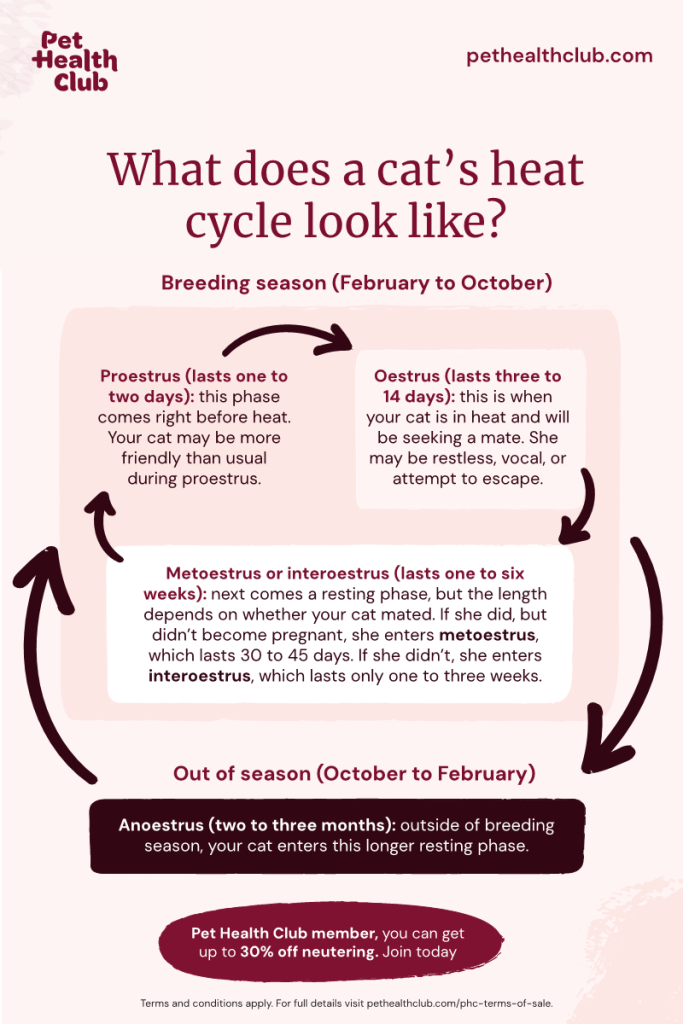
Breeding season in cats is linked to their natural reproductive cycle. Female cats go through stages called estrus or heat. These cycles control when a cat is ready to mate.
Understanding these cycles helps in knowing when cats can become pregnant. It also explains why cats show certain behaviors at specific times.
Estrus Cycle Phases
The estrus cycle in cats has several phases. Each phase has unique signs and changes in the cat’s body. The main phases are proestrus, estrus, metestrus, and anestrus.
- Proestrus:The cat shows early signs of heat but is not yet ready to mate.
- Estrus:The cat is fertile and will accept males for mating.
- Metestrus:The cat leaves the heat phase, and if pregnant, this phase continues until birth.
- Anestrus:A resting phase with no signs of heat or mating behavior.
Frequency Of Heat Cycles
Cats usually have multiple heat cycles during their breeding season. These cycles repeat if the cat does not become pregnant. The frequency depends on factors like daylight and breed.
| Factor | Effect on Heat Cycles |
|---|---|
| Daylight Length | Longer days increase cycle frequency |
| Breed | Some breeds cycle more often than others |
| Age | Younger cats start cycling more frequently |
| Environment | Indoor cats may cycle year-round |
Breeding Behavior
Cats have a specific breeding season that affects their behavior. This time is also called the mating season or heat period.
During breeding season, cats act differently. Both female and male cats show signs linked to reproduction.
Changes In Female Cats
Female cats, also called queens, go into heat several times a year. Their behavior changes to attract male cats.
Common changes include loud vocalizing and restlessness. They may rub against objects or people more often.
- Increased meowing or yowling
- Rolling on the floor frequently
- Rubbing face and body on surfaces
- Raising hindquarters when petted
- More affectionate or sometimes agitated
Male Cat Reactions
Male cats respond strongly to females in heat. Their behavior changes to find and mate with the female.
They often become more vocal and may mark territory with strong scents. Some males try to escape to find females.
- Loud yowling and calling
- Spraying urine to mark territory
- Pacing and restlessness
- Increased aggression toward other males
- Trying to escape the home
Managing Breeding Season
Breeding season for cats can lead to many unplanned litters. Managing this time helps control cat populations. It also keeps cats healthy and safe.
Understanding how to prevent unplanned litters is important for all cat owners. Taking action during breeding season can reduce stress for pets and owners.
Preventing Unplanned Litters
Preventing unplanned litters is key during the cat breeding season. There are simple ways to do this and protect your cat.
- Keep cats indoors to avoid mating outside.
- Separate male and female cats during heat cycles.
- Use comfortable collars or devices to reduce mating chances.
- Monitor cats closely for signs of heat.
- Consult a vet about temporary birth control options.
Spaying And Neutering Benefits
Spaying and neutering are permanent ways to stop unwanted litters. These procedures bring many health and behavior benefits.
| Benefit | Description |
| Reduces Risk of Diseases | Lowers chances of uterine infections and testicular cancer. |
| Controls Population | Stops cats from reproducing and helps reduce stray numbers. |
| Improves Behavior | Less marking, fighting, and roaming for mates. |
| Longer Life | Spayed or neutered cats often live healthier, longer lives. |
Credit: www.pets4homes.co.uk
Health Considerations
Breeding season for cats can affect their health in many ways. It is important to understand these effects to keep cats safe.
Proper care during this time helps prevent problems for both the mother and her kittens.
Breeding Risks For Cats
Breeding can cause physical stress on a cat’s body. It may lead to infections or injuries.
Unplanned litters increase the risk of genetic health issues. Young or unhealthy cats face more complications.
- Risk of uterine infections
- Complications during birth
- Spread of diseases between cats
- Stress leading to weakened immunity
- Higher chance of genetic defects
Care During Pregnancy
Pregnant cats need extra nutrition and a quiet place to rest. Regular vet visits ensure healthy development.
Monitor the cat for signs of discomfort or illness. Proper care helps kittens grow strong inside the mother.
- Feed high-quality, nutritious food
- Provide a warm, safe nesting area
- Schedule vet check-ups every few weeks
- Keep the cat indoors to avoid infections
- Watch for unusual behavior or symptoms
Breeding Season Myths
Many people have wrong ideas about when cats breed. These myths can cause confusion for cat owners.
Understanding the truth helps you care for your cat better and avoid surprises during breeding times.
Common Misconceptions
Some believe cats only breed in spring or summer. They think cats stop breeding in cold months.
Others say cats must have a male nearby to go into heat. Many think indoor cats do not have breeding seasons.
- Cats breed only in spring and summer.
- Indoor cats do not have breeding seasons.
- A male cat must be near for females to go into heat.
- All cats breed at the same time of year.
Facts Backed By Science
Cats are seasonal breeders, but their season depends on daylight length. Longer days trigger breeding behaviors.
Female cats can go into heat multiple times a year, especially in warmer climates or indoors with artificial light.
- Breeding season starts when daylight lasts about 12 hours or more.
- Indoor cats may breed year-round because of constant light.
- Female cats can cycle without a male nearby.
- Breeding seasons vary by location and climate.

Credit: www.purina.com
Frequently Asked Questions
When Does The Cat Breeding Season Start?
Cat breeding season typically begins in early spring, around March. It lasts until late fall, usually October or November, depending on climate and daylight.
How Long Is The Cat Breeding Season?
The cat breeding season generally lasts about six to eight months. It spans from early spring to late fall when daylight hours are longer.
Do Indoor Cats Have A Breeding Season?
Indoor cats can experience heat cycles year-round due to artificial lighting. They may not follow typical seasonal breeding patterns like outdoor cats.
What Triggers A Cat’s Breeding Season?
Longer daylight hours trigger a cat’s breeding season. Increased light stimulates hormones that induce heat cycles in female cats.
Conclusion
Cats usually breed during spring and summer months. Female cats go into heat several times a year. This is when they can become pregnant. Male cats become more active during this time too. Understanding breeding seasons helps manage cat populations better.
It also keeps your cat healthy and safe. Watch for signs like loud meowing and restlessness. Knowing this helps you care for your pet well. Remember, spaying or neutering can prevent unwanted litters. Taking these steps benefits both cats and owners alike.